
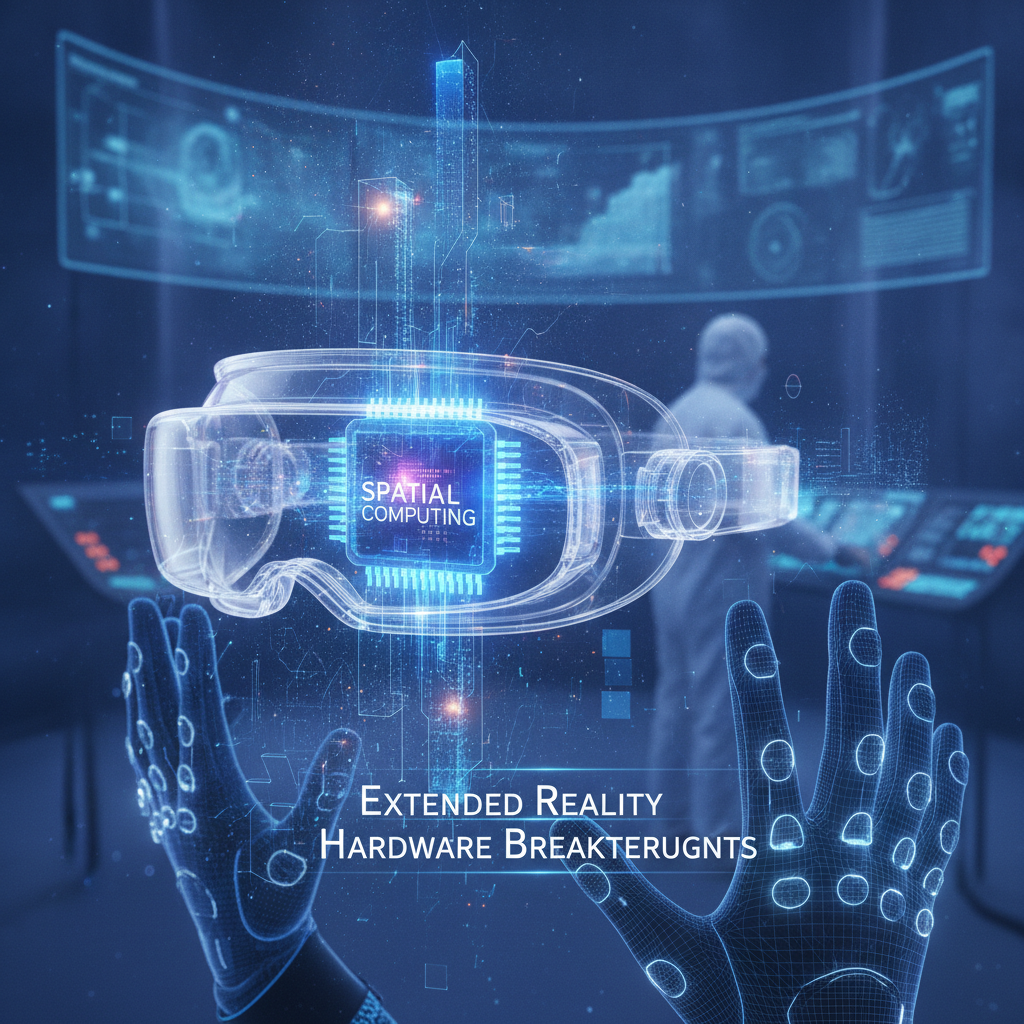
Spatial Computing & XR: Hardware Revolution!
Welcome to the future! Spatial Computing and Extended Reality (XR) are rapidly moving from science fiction to everyday reality, and the unsung heroes behind this transformation are the incredible advancements in hardware.
Spatial computing, encompassing technologies like Augmented Reality (AR), Virtual Reality (VR), and Mixed Reality (MR), allows us to interact with digital content in a physical space. While software creates the magic, it’s the underlying hardware that makes these immersive experiences possible, feel natural, and truly compelling. Let’s dive into some of the groundbreaking developments propelling this exciting field forward!
Display Technology: Sharper, Wider, Brighter
The “eyes” to these new realities are the displays, and they’ve seen massive improvements. We’re moving beyond pixelated screens to incredibly high-resolution micro-OLED and micro-LED displays, offering stunning clarity and vibrant colors. Crucially, breakthroughs in optics are expanding the field of view (FOV), making experiences feel less like looking through binoculars and more like natural vision. This reduction in the “screen door effect” and wider FOV significantly enhances immersion and reduces motion sickness.
Sensing & Tracking: Understanding Your World
For spatial computing to work, devices need to know exactly where they are, where you are looking, and what your hands are doing. Recent advancements in sensor technology are truly transformative. Integrated cameras and LiDAR sensors now allow for precise “inside-out” tracking, eliminating the need for external base stations. Eye-tracking technology enables foveated rendering (where only the area you’re looking at is rendered in full detail, saving processing power) and more intuitive user interfaces. Hand tracking is also becoming incredibly accurate, allowing for natural interactions without cumbersome controllers, mimicking real-world gestures.
Processing Power & Efficiency: Miniaturized Supercomputers
Running complex 3D environments and real-time sensor processing requires immense computational power. We’ve seen a surge in custom-designed chips and highly optimized mobile processors specifically tailored for XR applications. These chips deliver desktop-class performance in a compact, power-efficient form factor, crucial for untethered headsets. Advances in thermal management also ensure these powerful devices can run comfortably without overheating, making longer, more enjoyable sessions possible.
Form Factor & Ergonomics: Comfort is Key
Early XR devices were often bulky, heavy, and somewhat cumbersome. However, hardware manufacturers are now prioritizing comfort and aesthetics. We’re seeing lighter materials, more balanced designs, and sleeker profiles that make devices feel less like gadgets and more like eyewear. This focus on ergonomics is vital for broader adoption, as a comfortable device is one people are more likely to wear for extended periods, both for work and play.
The Road Ahead: What’s Next?
These hardware breakthroughs are paving the way for truly revolutionary applications across various sectors, from healthcare and education to entertainment and remote work. As displays become even more photorealistic, tracking more seamless, and devices lighter and more powerful, the line between the physical and digital world will continue to blur.
The journey of spatial computing and XR is incredibly exciting, and it’s clear that hardware innovations are the engine driving us into this new era of immersive experiences. Keep an eye out – the future is not just coming, it’s already here, taking physical form!
“`


Leave a Reply