
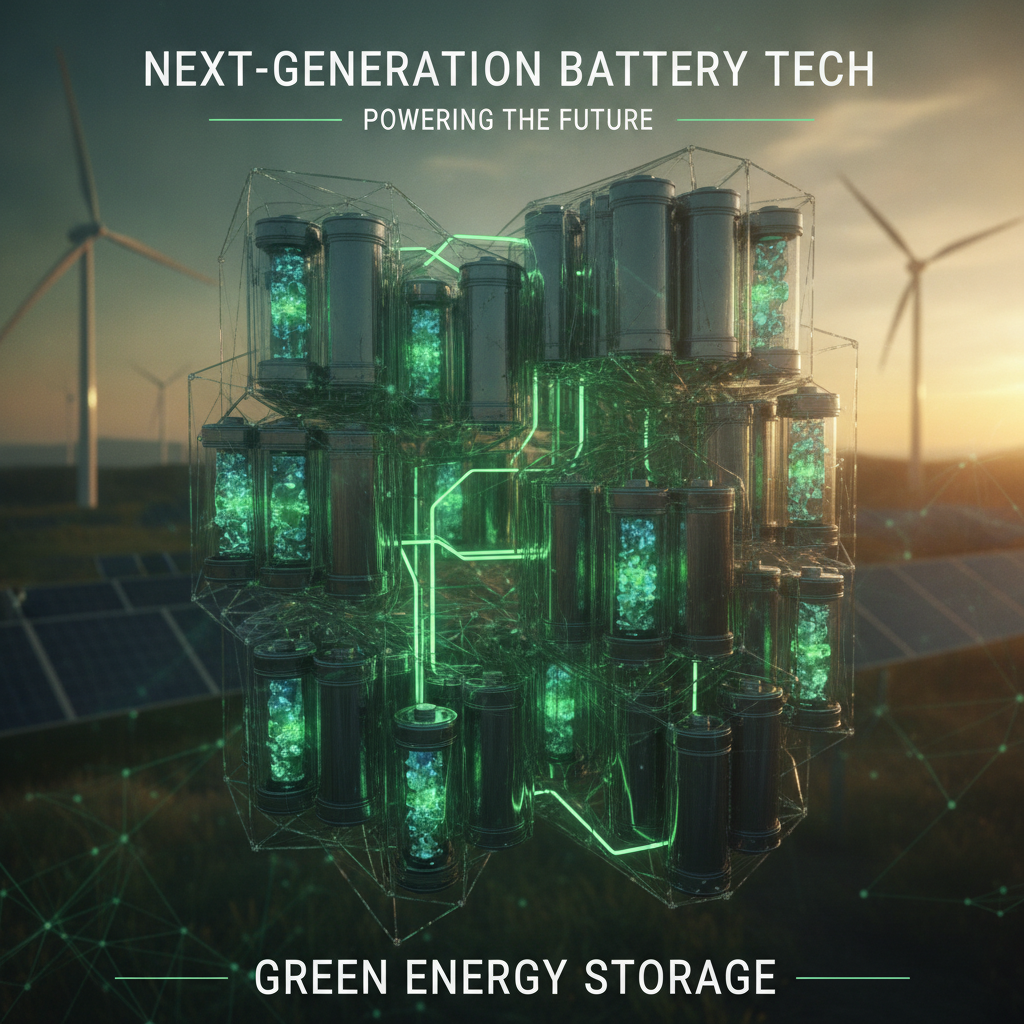
Powering Green: Battery Breakthroughs Ahead!
Hey there, green energy enthusiasts! Have you ever wondered what’s truly powering our shift towards a sustainable future? While solar panels and wind turbines capture the headlines, the unsung heroes are often the batteries that store all that clean energy. Today, we’re diving into the exciting world of Next-Generation Battery Technologies for Green Energy Storage, exploring how innovation is supercharging our path to a greener planet!
Why We Need Better Batteries, Now More Than Ever
Our current energy landscape is rapidly evolving. As we integrate more renewable sources like solar and wind into our grids, the need for efficient, reliable, and affordable energy storage becomes paramount. Traditional lithium-ion batteries, while revolutionary, come with limitations regarding energy density, cost, lifespan, safety concerns, and reliance on certain critical materials. Imagine a world where the sun doesn’t shine and the wind doesn’t blow – that’s where advanced energy storage steps in, ensuring a consistent power supply.
The challenges are clear: we need batteries that can store more energy in a smaller space, last longer, charge faster, operate safely, and be manufactured sustainably and economically. This isn’t just about electric cars; it’s about stabilizing entire power grids and bringing clean energy to every home.
Glimpsing the Future: Promising New Technologies
The good news? Scientists and engineers worldwide are tirelessly innovating, bringing forth a new generation of battery technologies that promise to tackle these challenges head-on. Let’s look at some of the most exciting contenders:
Solid-State Batteries: The Holy Grail?
Imagine a battery with a solid electrolyte instead of a liquid one. That’s the core idea behind solid-state batteries. They promise higher energy density, faster charging, enhanced safety (no flammable liquid electrolytes!), and a longer lifespan. While still in advanced development, these could be game-changers for electric vehicles and portable electronics.
Flow Batteries: Grid-Scale Powerhouses
Unlike traditional batteries that store energy within solid electrodes, flow batteries store energy in external tanks containing liquid electrolyte solutions. This design allows for independent scaling of power and energy capacity, making them ideal for large-scale, long-duration grid storage. They boast impressive lifespans and are safer due to non-flammable electrolytes.
Sodium-Ion Batteries: A Sustainable Alternative
Lithium is great, but sodium is abundant and cheaper! Sodium-ion batteries work on a similar principle to lithium-ion but use sodium, which is far more accessible globally. While they currently offer slightly lower energy density than Li-ion, their cost-effectiveness, environmental friendliness, and similar performance make them incredibly promising for stationary energy storage and even certain EV applications.
Lithium-Sulfur Batteries: The Next Density Leap
Lithium-sulfur (Li-S) batteries could offer significantly higher energy densities than current lithium-ion batteries – potentially tripling the range of an electric car for the same battery weight! Sulfur is also abundant and inexpensive. The main hurdles involve improving cycle life and addressing material degradation, but the potential is enormous.
The Impact on a Greener Future
These next-generation battery technologies are more than just scientific marvels; they are critical enablers for a truly green future. By overcoming the limitations of current storage, they will:
- **Accelerate Renewable Adoption:** Making intermittent solar and wind power reliable 24/7.
- **Enhance Grid Stability:** Preventing blackouts and improving energy efficiency.
- **Boost Electric Vehicle Performance:** Longer ranges, faster charging, and lower costs.
- **Reduce Environmental Footprint:** Using more abundant materials and enabling better recycling.
The journey towards fully realizing these technologies is ongoing, filled with research, development, and scaling challenges. However, the progress we’re seeing is incredibly encouraging. The future of energy storage is bright, clean, and increasingly powerful!
What are your thoughts on these innovations? Let us know in the comments below!
“`



Leave a Reply