
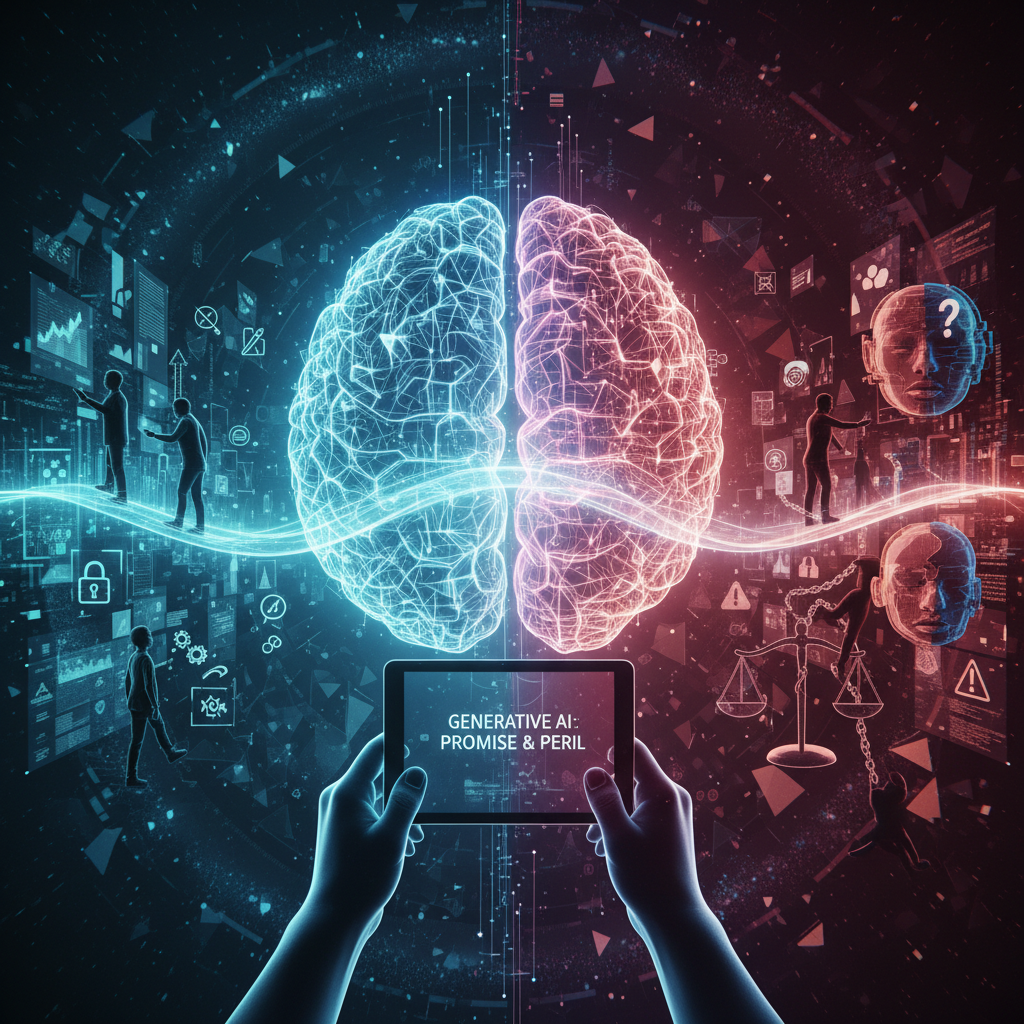
Generative AI: Unpacking Its Impact & Ethics
In recent years, Generative AI has moved from a niche research topic to a mainstream phenomenon, captivating our imaginations and reshaping industries. Tools that can create compelling text, stunning images, complex code, and even original music from simple prompts are no longer futuristic fantasies but everyday realities. This rapid evolution presents us with incredible opportunities, but it also compels us to confront a complex array of ethical questions.
The Expanding Horizon of Generative AI
The impact of Generative AI is truly breathtaking in its breadth. From revolutionizing creative fields to accelerating scientific discovery, its applications are vast and growing. Content creators use it to brainstorm ideas and draft articles, while designers leverage it for rapid prototyping and style exploration. In software development, AI assists in writing and debugging code, dramatically speeding up development cycles. Beyond the digital realm, Generative AI is being explored for drug discovery, personalized education, and even creating synthetic data for training other AI models, pushing the boundaries of what’s possible.
This surge in capabilities promises increased efficiency, new forms of creativity, and solutions to long-standing problems. It’s an exciting time, brimming with potential for innovation that could truly uplift humanity in countless ways.
Navigating the Ethical Minefield
As Generative AI becomes more powerful and pervasive, so too do the ethical dilemmas it presents. The very nature of its ability to create new content introduces profound questions about authenticity, fairness, and accountability. It’s crucial that we, as a society, engage in thoughtful discussions and establish robust frameworks to guide its development and deployment responsibly.
Bias and Fairness: A Critical Lens
One of the most pressing concerns revolves around bias and fairness. Generative AI models learn from vast datasets, and if those datasets contain societal biases (which many do), the AI will inevitably perpetuate, and sometimes even amplify, those biases in its outputs. This can lead to discriminatory outcomes in areas like hiring, lending, or even creative representation, reinforcing stereotypes and marginalizing certain groups. Addressing this requires careful curation of training data, transparent model development, and rigorous testing for fairness.
Copyright, Ownership, and Authenticity
The questions surrounding copyright, ownership, and authenticity are equally complex. Who owns the copyright to content generated by an AI? Is it the user who prompted it, the developer of the AI, or does it belong in the public domain? Furthermore, the training of these models often involves ingesting vast amounts of existing copyrighted material, raising questions about intellectual property rights. The rise of sophisticated deepfakes and the ability to generate hyper-realistic but entirely fabricated content also poses significant challenges to discerning truth from fiction, threatening public trust and the integrity of information.
The Future of Work and Human Creativity
Generative AI sparks significant debate about the future of work and human creativity. While some fear widespread job displacement, particularly in creative and knowledge-based roles, others argue that AI will augment human capabilities, taking over repetitive tasks and freeing people to focus on higher-level strategic thinking, innovation, and truly unique creative endeavors. The key will be anticipating these shifts, investing in re-skilling initiatives, and fostering a collaborative relationship between humans and AI.
Striking a Balance: Innovation with Integrity
Ultimately, our challenge is to strike a delicate balance: fostering groundbreaking innovation while upholding integrity and ethical responsibility. This isn’t about halting progress, but about guiding it thoughtfully. It requires developers to embed ethical considerations from the outset, policymakers to create adaptable regulations, and users to engage with these powerful tools critically and responsibly. Transparency in how AI models are built and used, along with clear accountability mechanisms, will be paramount.
A Collaborative Path Forward
The journey with Generative AI is just beginning. Its broadening impact is undeniable, and the ethical debates it sparks are vital for shaping a future where this technology serves humanity’s best interests. This requires a collaborative effort from technologists, ethicists, policymakers, artists, and the public. By working together, we can harness the incredible power of Generative AI to create a more innovative, equitable, and responsible world for everyone.
“`



Leave a Reply