Advanced Generative AI: A Multimodal Revolution
Ever imagined AI that doesn’t just write a poem but also paints an accompanying artwork, or creates a realistic 3D model from a simple description? We’re not talking science fiction anymore. Welcome to the thrilling frontier of Advanced Generative AI and Multimodal Models, where the boundaries of creation are constantly being redefined. Get ready to explore how these incredible technologies are shaping our future!
What is Advanced Generative AI?
Generative AI has come a long way from its early days of generating simple text or images. Advanced generative AI models are characterized by their remarkable ability to understand context, nuance, and even intent. They can produce highly complex, coherent, and novel outputs across various domains. Think beyond just “write me a story”; now it’s “design a personalized learning module for a 5th grader on photosynthesis, including interactive elements and assessment questions.” These models demonstrate a deeper grasp of underlying patterns and relationships, leading to more sophisticated and valuable creations.
The Power of Multimodal Models
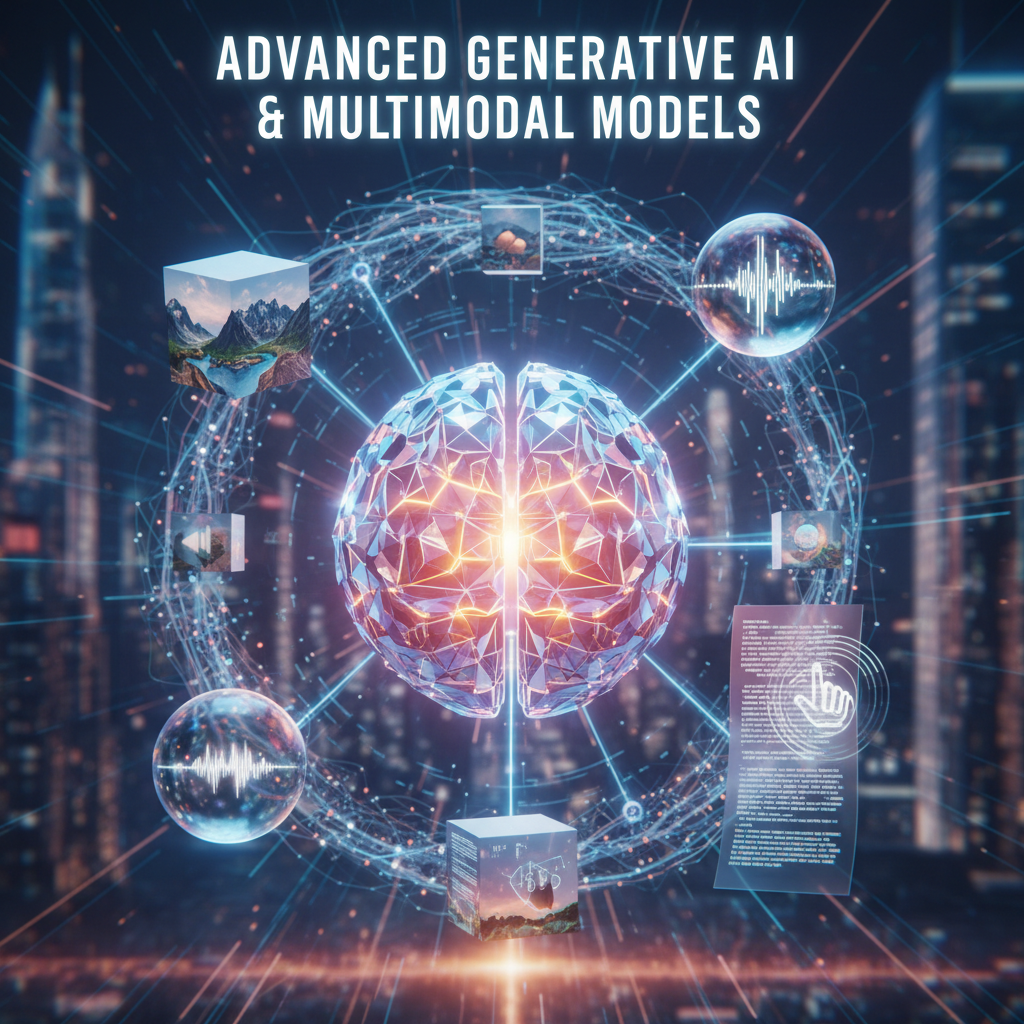
While advanced generative AI is powerful on its own, its true potential explodes when it becomes multimodal. What does that mean? Simply put, multimodal models can process and generate information across different “modes” – such as text, images, audio, video, and even 3D data. Imagine an AI that can listen to a piece of music and generate a dance sequence, or analyze a medical image alongside patient notes to suggest a diagnosis. This fusion of sensory inputs allows AI to build a much richer, more human-like understanding of the world, leading to more intuitive interactions and incredibly versatile outputs.
Real-World Applications & Impact
The implications of advanced generative AI and multimodal models are staggering. In creative industries, artists and designers are using them to rapidly prototype ideas, generate unique content, and personalize experiences. Healthcare is seeing innovations in drug discovery, diagnostic support, and personalized treatment plans. Education can be revolutionized with AI creating dynamic, adaptive learning materials. Even accessibility can be vastly improved by models that translate complex information into various accessible formats. From designing new materials to simulating complex systems, the applications are seemingly endless.
The Road Ahead: Challenges and Opportunities
As with any transformative technology, there are challenges to address. Ethical considerations around bias in generated content, intellectual property rights, and the potential for misuse require careful thought and robust safeguards. The computational resources needed to train and run these massive models are also significant. However, these challenges are matched by immense opportunities for further innovation. Research continues to push boundaries in model efficiency, interpretability, and robust ethical frameworks. The future promises even more sophisticated, adaptable, and responsible AI creations.
Conclusion
Advanced Generative AI and Multimodal Models are not just buzzwords; they represent a fundamental shift in how we interact with and create technology. They are empowering us to unlock unprecedented levels of creativity, solve complex problems, and envision a future where technology truly augments human potential across all dimensions. The journey has just begun, and the possibilities are as limitless as our imagination. What will you create?

Leave a Reply