
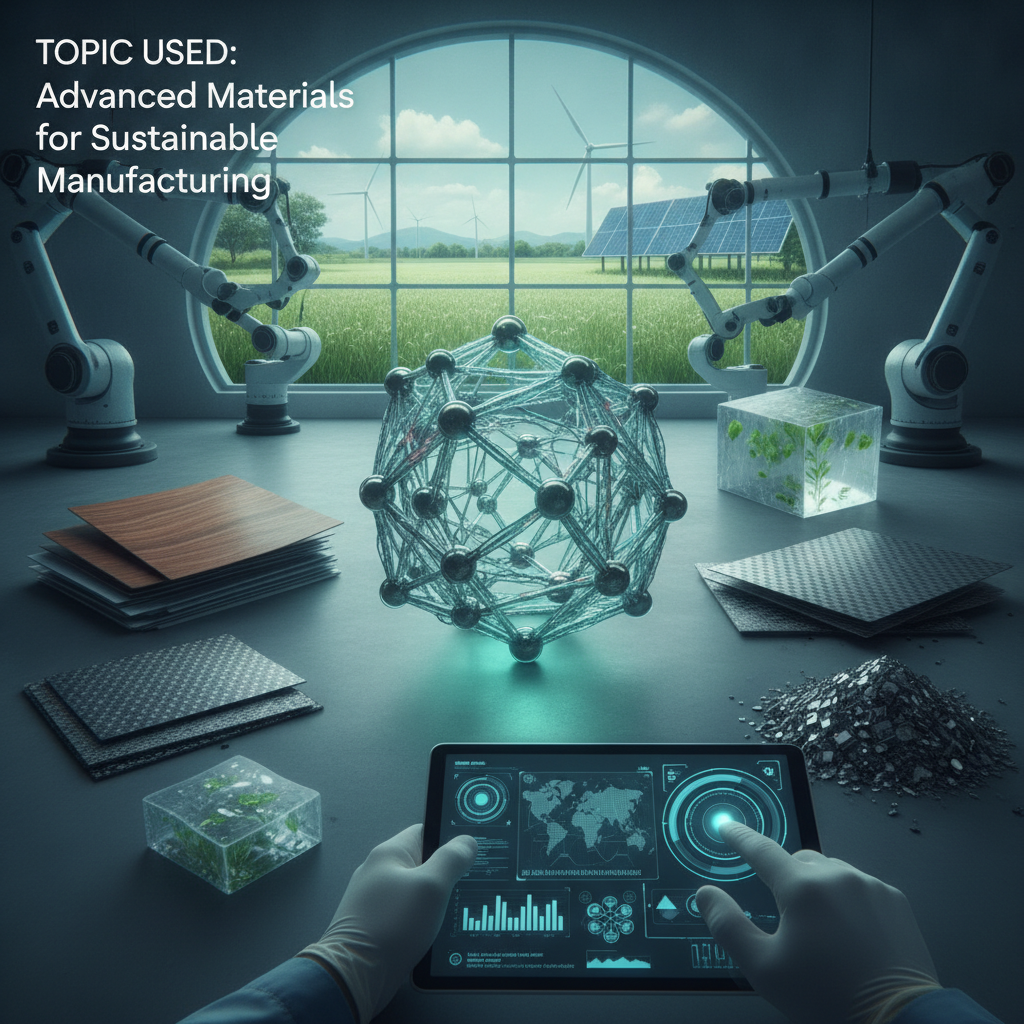
Powering Sustainability with Advanced Materials
In a world increasingly focused on environmental responsibility, sustainable manufacturing isn’t just a buzzword – it’s an imperative. But how do we truly build a greener industrial future? A significant part of the answer lies in the incredible potential of advanced materials. Join us as we explore how cutting-edge materials are revolutionizing the way products are made, used, and recycled, paving the way for a more sustainable planet!
What Are Advanced Materials and Why Do They Matter?
Advanced materials are a class of engineered substances designed with superior properties or functionalities compared to conventional materials. Think stronger, lighter, more durable, or even “smarter” materials. Their importance in sustainable manufacturing cannot be overstated.
By leveraging these innovations, industries can reduce waste, conserve energy, minimize carbon footprints, and extend product lifecycles. It’s about doing more with less, and doing it better for the environment.
The Material Revolution: Key Players in Sustainability
Lightweight & High-Performance Materials
Imagine a car that uses less fuel, or an airplane that requires less energy to fly. This isn’t just a dream; it’s becoming a reality thanks to materials like carbon fiber composites, advanced aluminum alloys, and titanium. These materials offer exceptional strength-to-weight ratios, leading to significant reductions in energy consumption in transportation, aerospace, and even everyday products.
Bio-based and Biodegradable Materials
Moving away from fossil-fuel dependence is crucial. Bio-based plastics derived from renewable resources (like corn starch or sugar cane) and biodegradable materials offer exciting alternatives. They reduce our reliance on finite resources and, crucially, offer solutions for end-of-life disposal, breaking down naturally instead of accumulating in landfills for centuries.
Recycled and Upcycled Materials
The circular economy thrives on giving materials a second, third, or even fourth life. Advanced recycling technologies are transforming waste into valuable resources. From high-quality recycled plastics to metals recovered with minimal energy, these materials close the loop, drastically cutting down on raw material extraction and associated environmental impacts.
Smart Materials for Longevity
What if a material could heal itself when scratched, or change properties in response to its environment? Smart materials, such as self-healing polymers or materials with integrated sensors, are designed for extreme durability and predictive maintenance. This significantly extends product lifespans, reducing the need for premature replacements and further resource consumption.
Driving a Greener Industrial Future
The integration of advanced materials into manufacturing processes has a cascading positive effect:
- Reduced Energy Consumption: Lighter products need less power to move; more efficient manufacturing processes use less energy.
- Minimized Waste: Materials designed for recyclability, biodegradability, or longer lifespans generate less waste.
- Lower Emissions: Less energy and less waste directly translate to a smaller carbon footprint.
- Enhanced Product Performance: Sustainable products don’t have to compromise on quality; often, advanced materials make them superior.
The journey towards truly sustainable manufacturing is complex, but advanced materials are undoubtedly one of our most powerful tools. By continuously innovating and adopting these remarkable substances, we’re not just creating better products – we’re building a more resilient, resource-efficient, and environmentally friendly future for everyone. The material revolution is here, and it’s green!
“`



Leave a Reply