

Connecting the Dots: Commercial Space & Satellites
For decades, space exploration was largely the domain of government agencies, conjuring images of astronauts, moon landings, and complex international missions. While those endeavors continue to inspire, we are now firmly in a new era: the age of commercial space exploration. This isn’t just about launching rockets; it’s about a rapidly expanding ecosystem where private companies are driving innovation, reducing costs, and making space more accessible than ever before. A key player in this revolution? The rise of satellite constellations.
The New Space Race: It’s Not Just Governments Anymore
Think “space” and companies like SpaceX, Blue Origin, and Rocket Lab immediately spring to mind. These private enterprises, alongside many others globally, are not just ferrying cargo and people to orbit; they’re pushing the boundaries of rocket technology, developing reusable launch systems, and making space travel significantly more affordable. This shift has opened the door for a diverse range of new ventures, from in-orbit manufacturing to space tourism, fundamentally changing who can access and utilize the cosmos.
This commercialization fosters a vibrant competitive landscape, accelerating technological development at an unprecedented pace. It means more innovative solutions for Earth-bound problems and exciting new possibilities for our future beyond our planet.
Satellite Constellations: Connecting the World (and Beyond)
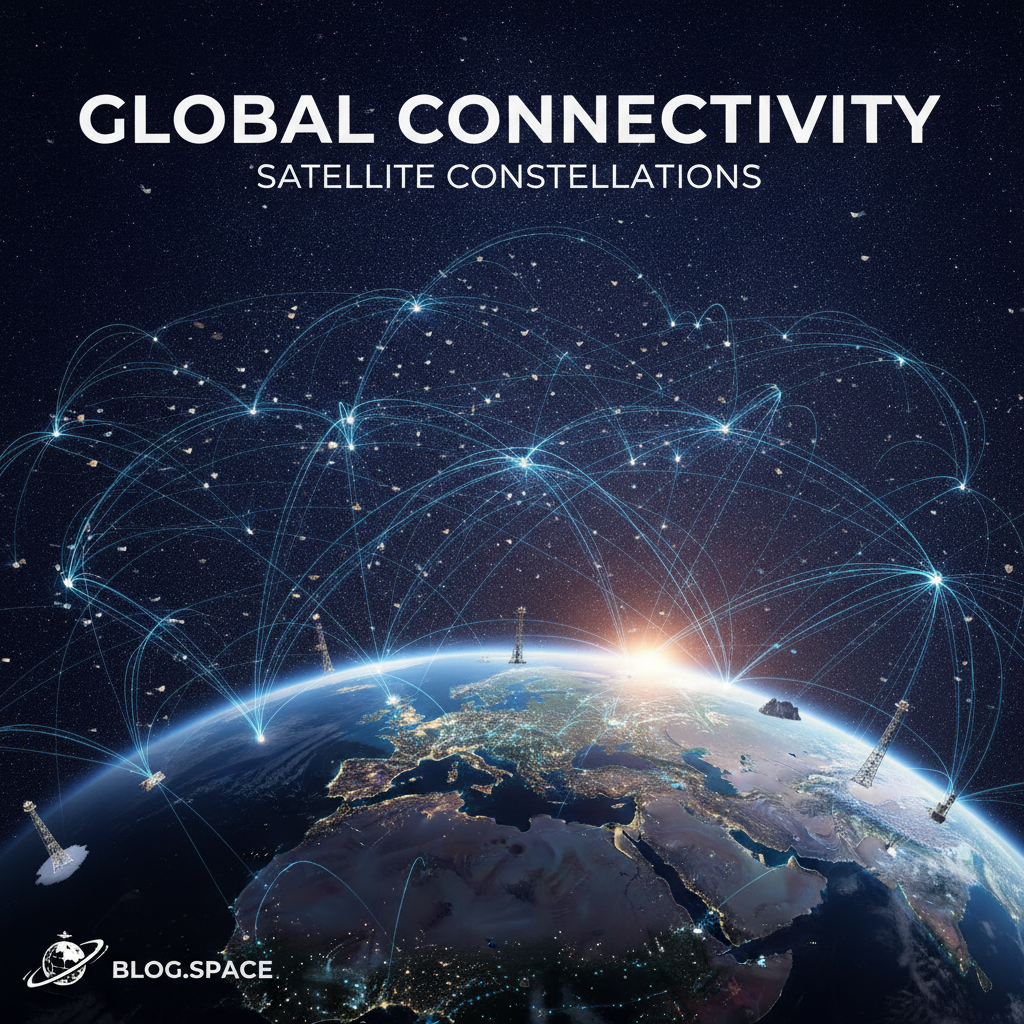
One of the most impactful developments in commercial space is the proliferation of satellite constellations. These aren’t single satellites, but rather large groups—sometimes thousands—of interconnected satellites working in concert to provide continuous coverage over vast areas. Their applications are incredibly diverse and impactful:
- Global Internet: Projects like Starlink, OneWeb, and Amazon’s Project Kuiper aim to deliver high-speed broadband internet to underserved and remote areas worldwide, bridging the digital divide.
- Enhanced Earth Observation: Constellations of imaging satellites provide near real-time data for agriculture, urban planning, environmental monitoring, disaster response, and even tracking climate change.
- Improved Navigation & IoT: Advancements in GPS and new Internet of Things (IoT) constellations offer more precise location data and seamless global connectivity for smart devices and logistics.
These networks are transforming industries, empowering communities, and providing critical data that was once unimaginable.
Opportunities and Challenges: A Balancing Act
The rise of commercial space and satellite constellations presents incredible opportunities. It promises economic growth, job creation, unprecedented global connectivity, and a surge in scientific and technological innovation. From enabling sustainable farming practices with precision data to enhancing communication during emergencies, the benefits are vast and far-reaching.
However, this rapid expansion also comes with significant challenges that require careful consideration and international cooperation:
- Space Debris: More satellites mean more objects in orbit, increasing the risk of collisions and contributing to space debris, a threat to operational satellites and future missions.
- Light Pollution: Large constellations of bright satellites can interfere with ground-based astronomical observations, impacting our ability to study the universe.
- Orbital Traffic Management: Managing the increasing number of active satellites and ensuring safe operations requires sophisticated new technologies and robust international regulations.
Addressing these challenges responsibly is crucial to ensure the long-term sustainability and accessibility of space for everyone.
The Future is Bright (and Busy)
The commercial space sector and the expansion of satellite constellations are undeniably shaping our future. They represent a monumental shift towards a more interconnected and data-rich world, with profound implications for how we live, work, and understand our planet and beyond. As we continue this exciting journey, a commitment to innovation, sustainability, and global collaboration will be key to harnessing the full potential of this new cosmic frontier.
“`


Leave a Reply