
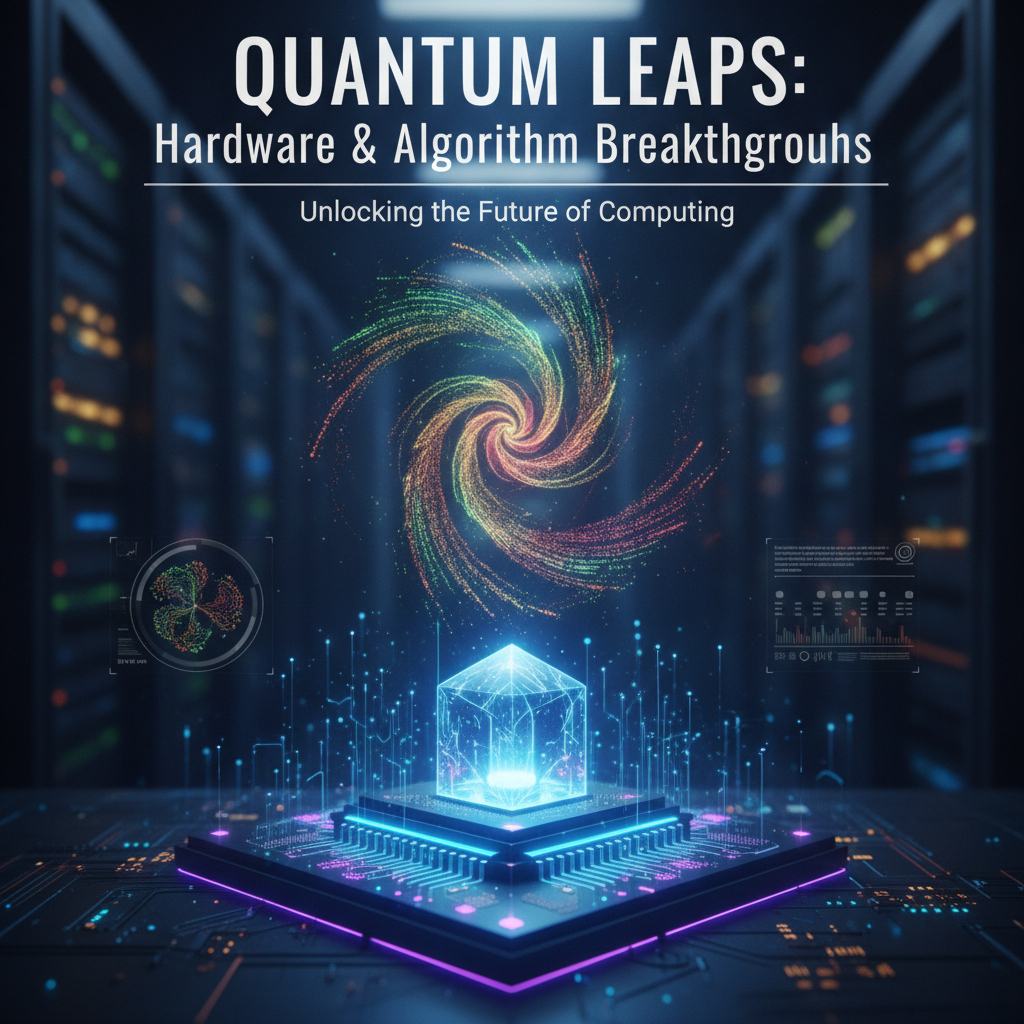
Quantum Leaps: Hardware & Algorithms Advancing
Hello quantum enthusiasts and curious minds! It feels like just yesterday quantum computing was a distant dream, confined to the pages of science fiction. Today, however, we’re witnessing truly incredible breakthroughs in both the hardware that powers these machines and the algorithms designed to harness their unique capabilities. Let’s dive into the exciting world of quantum progress!
The Race in Quantum Hardware Development
The foundation of quantum computing lies in its hardware – the physical qubits that store and process information. We’re seeing a vibrant race across multiple technologies, each with its own strengths and challenges:
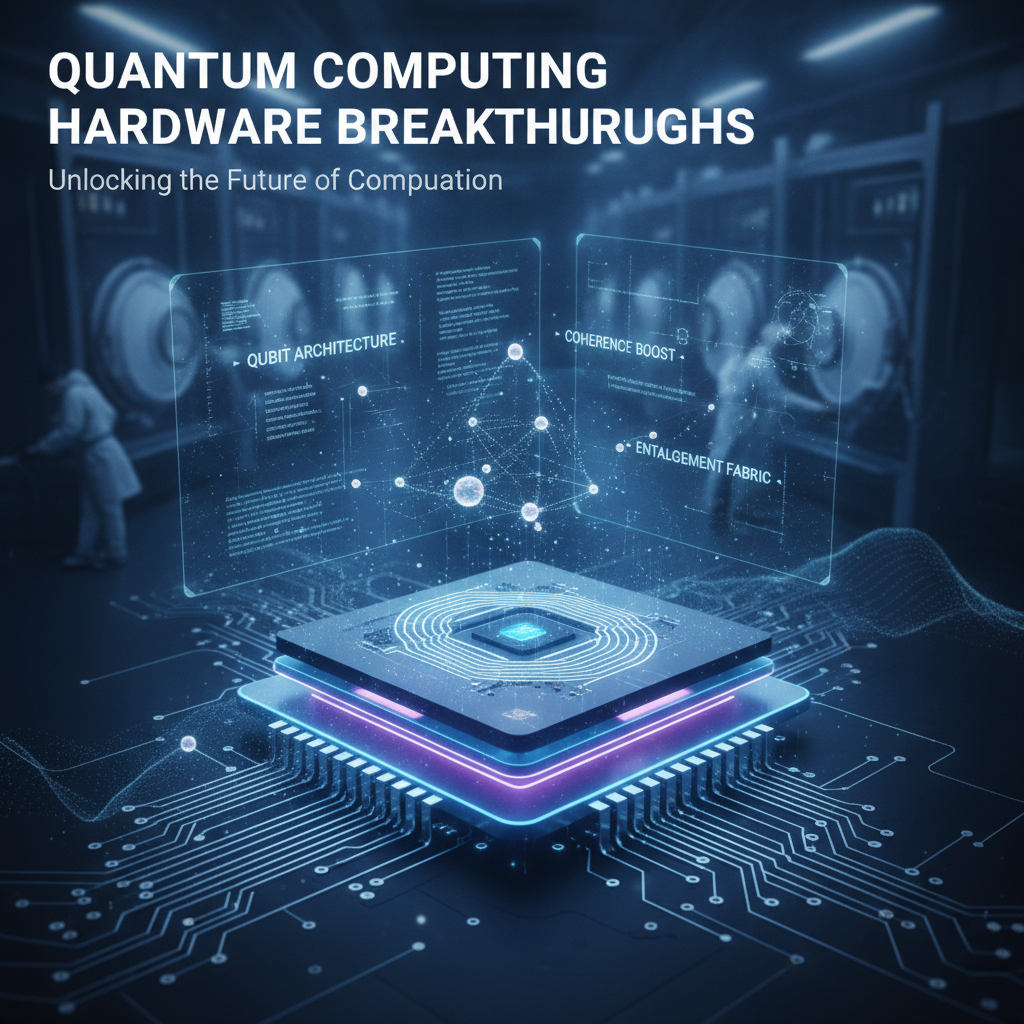
Superconducting Qubits: Giants like IBM and Google continue to push the boundaries with superconducting circuits. Recent advancements focus on increasing qubit counts while simultaneously improving coherence times (how long a qubit can maintain its quantum state) and reducing error rates. We’re seeing more complex processors capable of running increasingly sophisticated quantum circuits.
Trapped Ion Qubits: Companies such as IonQ are making significant strides with trapped ion systems. These qubits are known for their exceptional coherence and high fidelity gates, meaning they can perform operations with very low error. Recent work has concentrated on scaling these systems, trapping more ions, and developing reconfigurable architectures.
Photonic Qubits: Light-based quantum computers are also showing immense promise, particularly for their potential at room temperature and ease of integration with fiber optics. Researchers are developing new methods for generating, manipulating, and detecting photons to perform quantum computations, opening doors for quantum communication and networking.
Overall, the trend is clear: more stable, less error-prone qubits that can be scaled up to tackle more complex problems. Error correction, while still a grand challenge, is seeing incremental but vital progress, bringing us closer to fault-tolerant quantum computers.
Algorithmic Innovations Driving Practical Applications
Hardware is only half the story; without the right algorithms, quantum computers are just fascinating curiosities. Fortunately, the algorithmic landscape is exploding with innovation:
Quantum Machine Learning (QML): Researchers are developing quantum algorithms to enhance machine learning tasks, from pattern recognition to data classification. Hybrid quantum-classical algorithms, where a quantum processor performs a specific part of a larger computation alongside a classical computer, are particularly promising for near-term applications.
Optimization Algorithms: Quantum Approximate Optimization Algorithms (QAOA) and other variational quantum algorithms are being refined to tackle complex optimization problems. These could revolutionize fields like logistics, finance, and drug discovery by finding optimal solutions far faster than classical methods.
Materials Science and Drug Discovery: Simulating molecular interactions is an immensely complex task for classical computers. Quantum algorithms offer a path to accurately model these interactions at a fundamental level, potentially leading to the discovery of new materials, more efficient catalysts, and life-saving drugs.
Cryptography and Security: While Shor’s algorithm famously poses a threat to current encryption, new quantum-resistant cryptographic algorithms are also being developed, ensuring our digital future remains secure in the quantum age.
The Symbiotic Relationship: Hardware and Software Fueling Each Other
What’s truly exciting is the synergistic relationship between hardware and algorithm development. As hardware becomes more powerful and reliable, it enables the testing and refinement of more complex algorithms. In turn, breakthroughs in algorithms motivate hardware developers to meet new computational demands. This feedback loop is accelerating progress at an unprecedented rate.
Looking Ahead: A Quantum Future
We’re still in the early stages of the quantum era, but the progress in quantum computing hardware and algorithms is nothing short of astounding. While challenges remain – particularly in achieving true fault tolerance and scalability – the momentum is undeniable. The future promises a world where quantum computers could unlock solutions to some of humanity’s most pressing problems, from climate change to medical breakthroughs.
Keep your eyes peeled, because the quantum realm is just getting started!
“`


Leave a Reply