
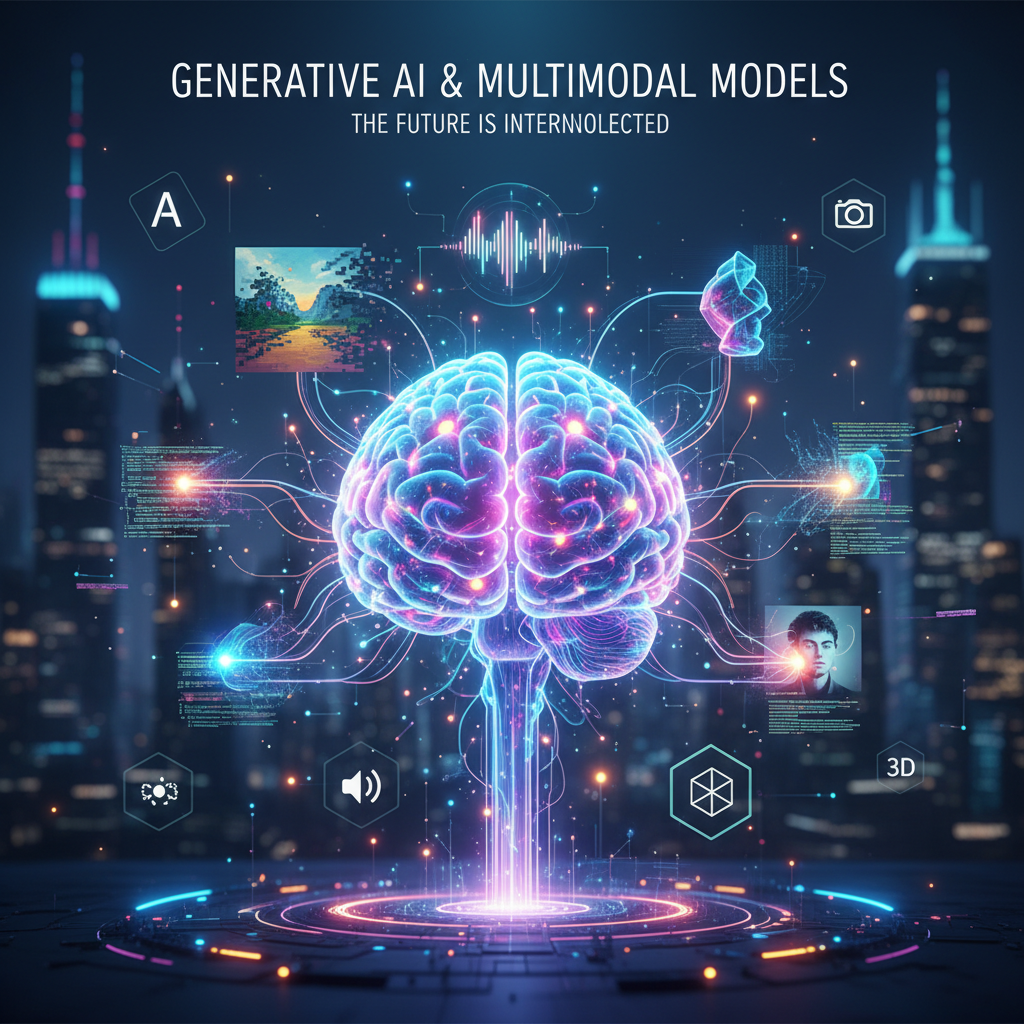
Generative AI & Multimodal: A Creative Leap
Welcome to an exciting era where artificial intelligence isn’t just analyzing data; it’s creating it! Generative AI has captured our imaginations, producing everything from lifelike images to compelling text. But what happens when we teach these creative minds to understand and produce across *multiple* types of information? Enter multimodal models – the next frontier in AI innovation.
What is Generative AI, Anyway?
At its core, Generative AI refers to AI systems capable of generating new, original content. Unlike traditional AI that might classify or predict, generative models learn patterns from vast datasets and then use that knowledge to produce novel outputs. Think Stable Diffusion creating stunning images from text prompts, or ChatGPT writing articles based on a few keywords. It’s about moving from analysis to creation, opening up a universe of possibilities for creativity, automation, and problem-solving.
The Power of Multimodal Models
While powerful on their own, generative models often specialize in one data type – text, images, or audio. Multimodal models, however, are designed to process and understand information from multiple modalities simultaneously. Imagine an AI that can not only generate a description of an image but also understand the emotions conveyed in a video, or create a musical score based on a written story. This ability to cross-reference and synthesize different types of input allows AI to grasp a richer, more nuanced understanding of the world, much like humans do when we use our sight, hearing, and touch together.
How Generative AI and Multimodal Combine
The real magic happens when Generative AI and Multimodal models join forces. Instead of just generating an image from an image, or text from text, we can now generate an image from a text description, or a 3D model from an architectural sketch and a verbal command. This synergy enables AI to:
- Create richer content: Produce outputs that integrate multiple elements seamlessly, like a video with synced audio and captions.
- Understand complex context: Interpret prompts that involve visual, auditory, and textual cues to generate highly relevant and creative responses.
- Break down communication barriers: Transform information from one modality to another, making content more accessible and interactive.
This combination moves us closer to AI systems that can interact with the world in a way that feels more intuitive and human-like.
Real-World Applications & The Future
The implications of generative multimodal AI are staggering. We’re already seeing applications emerge:
- Creative Industries: Automating video production, designing unique product prototypes, or generating personalized music.
- Education: Creating interactive learning materials, explaining complex concepts using visual and auditory aids, or summarizing lectures.
- Healthcare: Generating synthetic medical images for training, or providing more comprehensive diagnostic support by integrating patient records, scans, and verbal descriptions.
- Accessibility: Translating sign language into spoken text, or describing visual scenes for visually impaired individuals in rich detail.
Looking ahead, we can expect AI assistants that understand our complex requests involving multiple data types, leading to truly intelligent and versatile tools.
Challenges and Considerations
While the potential is immense, generative multimodal AI also comes with its share of challenges. Training these models requires vast amounts of diverse, high-quality multimodal data, which can be computationally expensive and difficult to acquire. Ethical considerations around bias in generated content, the potential for misinformation (deepfakes), and ensuring responsible development are paramount. We must collectively work towards frameworks that ensure these powerful technologies benefit all of humanity.
The fusion of Generative AI and Multimodal models isn’t just an incremental improvement; it’s a fundamental shift in how AI understands and creates. We’re on the cusp of a new era where AI can truly perceive, reason, and create across the rich tapestry of human experience, promising a future filled with unparalleled innovation and creativity. It’s an exciting time to be part of the journey!
“`


Leave a Reply