
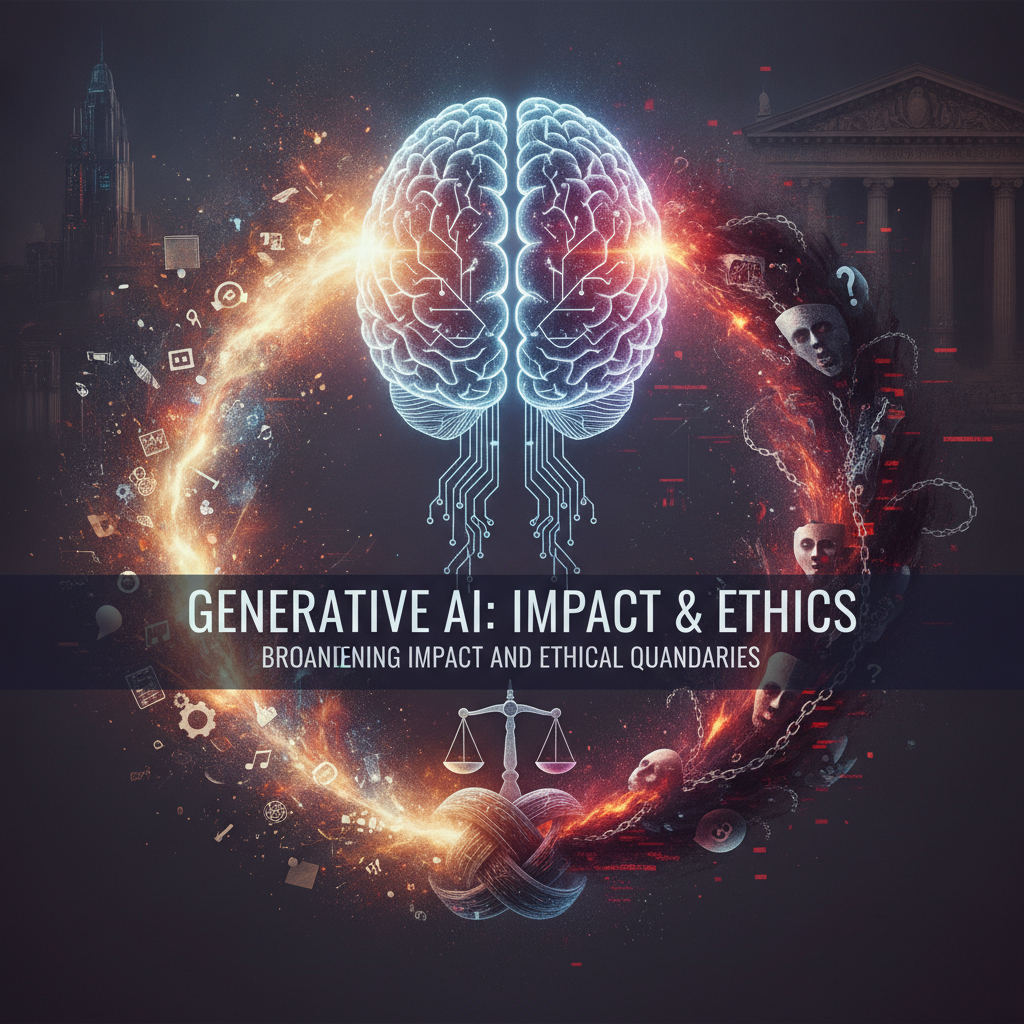
GenAI: Innovation, Ethics, and Our Collective Future
Generative AI isn’t just a buzzword; it’s a rapidly evolving force reshaping industries and daily life. From crafting compelling content to accelerating scientific discovery, its capabilities are expanding at an incredible pace. But with great power comes great responsibility, and Generative AI brings with it a host of ethical challenges we must confront head-on.
The Broadening Horizon of Generative AI
Think beyond chatbots! Generative AI, capable of creating new, original content, is now impacting almost every sector. In creative fields, it’s assisting artists, musicians, and writers in breaking through creative blocks and generating novel ideas. Developers are leveraging it for rapid code generation and debugging, while businesses are using it to personalize customer experiences and automate content creation at scale.
Its application stretches into drug discovery, material science, and even architecture, accelerating design processes and enabling simulations that were once prohibitively complex. The sheer versatility of these models means we’re only just scratching the surface of what’s possible, promising unprecedented leaps in productivity and innovation across the board.
Navigating the Ethical Quandaries
While the potential is vast, the ethical dilemmas posed by Generative AI are equally significant and demand our urgent attention. Ignoring these challenges would be a disservice to future generations and could undermine the very benefits AI promises.
Truth, Misinformation, and Deepfakes
One of the most pressing concerns is the ease with which Generative AI can produce highly convincing, yet entirely fabricated, text, images, and videos. This capability, often referred to as ‘deepfakes,’ threatens to erode trust in digital media, spread misinformation at an unprecedented scale, and even destabilize social and political discourse. Distinguishing between AI-generated and human-created content is becoming increasingly difficult, challenging our perceptions of truth and authenticity.
Copyright, Ownership, and Fair Use
Who owns the art or text created by an AI? If an AI is trained on vast datasets of existing human-created works, what are the implications for intellectual property rights? Artists and creators are rightly concerned about their work being used without permission or compensation, potentially devaluing human creativity. Defining fair use in the age of generative models is a complex legal and ethical puzzle that current frameworks are struggling to address.
Bias, Fairness, and Algorithmic Discrimination
Generative AI models learn from the data they’re fed, and if that data contains historical biases present in society, the AI will unfortunately perpetuate and even amplify them. This can lead to unfair or discriminatory outcomes in areas like hiring, lending, or even criminal justice, where AI might generate biased content or recommendations. Ensuring fairness and mitigating bias in training data and model outputs is crucial for developing AI responsibly.
Job Displacement and the Future of Work
As AI becomes more capable of performing tasks once requiring human intervention, concerns about job displacement are growing. While Generative AI is likely to create new jobs and augment existing ones, the transition could be disruptive for many sectors. Preparing the workforce for this shift through education, retraining, and robust social safety nets will be vital to ensure a just transition.
Our Collective Responsibility
Generative AI is a powerful tool, not an autonomous entity. Its impact will ultimately be shaped by the choices we make today. This necessitates a multi-faceted approach involving technologists, policymakers, educators, and the public.
We need to foster open dialogue, develop transparent and auditable AI systems, establish clear ethical guidelines, and implement robust regulatory frameworks. Education is key, ensuring that individuals understand both the capabilities and limitations of AI. Ultimately, a future where Generative AI serves humanity’s best interests depends on our collective commitment to responsible innovation and ethical stewardship.
What are your thoughts on Generative AI’s evolving landscape? Share your perspectives in the comments below!
“`



Leave a Reply