
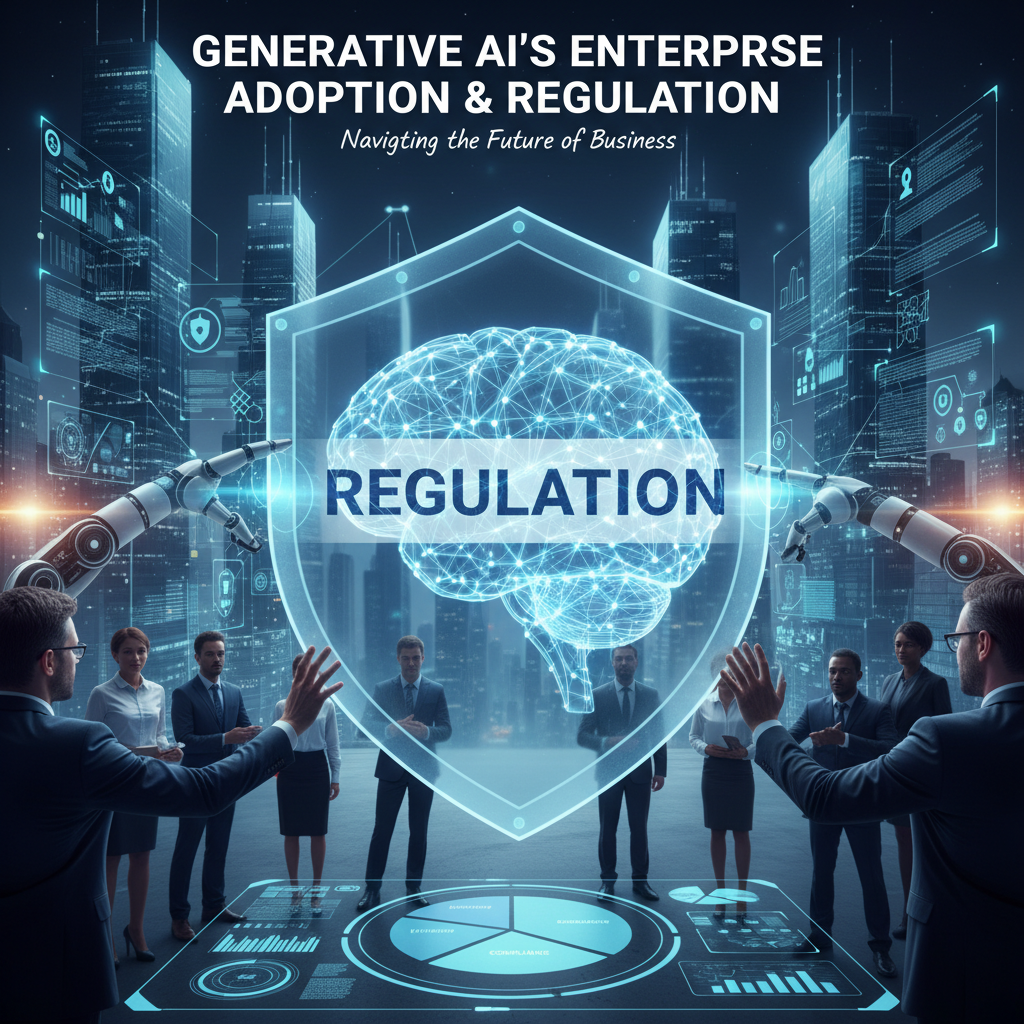
GenAI in Business: Adoption, Innovation & Regulation
Generative AI (GenAI) is no longer just a futuristic concept; it’s rapidly reshaping the business landscape. From automating mundane tasks to sparking unprecedented innovation, enterprises are keen to harness its power. But with great power comes great responsibility, and the twin pillars of adoption and regulation are now firmly in the spotlight for organizations worldwide.
The Enterprise Rush: Why GenAI Now?
Enterprises are embracing GenAI at an astonishing pace. Why the sudden surge? It’s simple: efficiency, cost savings, and a significant competitive edge. Imagine marketing teams generating personalized campaigns in minutes, developers writing code faster, or customer service bots offering nuanced, empathetic support. The potential for transforming workflows, enhancing productivity, and creating entirely new products is immense. This isn’t just about automation; it’s about augmentation, empowering human creativity and strategic thinking like never before.
Unlocking Value, Navigating Challenges
While the value proposition of GenAI is clear – enhanced productivity, better decision-making, and novel product development – the path isn’t without its bumps. Enterprises grapple with critical questions around data privacy (what data can the AI access and learn from?), robust security measures (how do we protect sensitive information from misuse?), and ethical use (ensuring fairness, transparency, and avoiding bias in AI outputs). Integrating these complex systems into existing infrastructures and upskilling employees to effectively collaborate with AI tools also present significant hurdles that require careful planning and execution.
The Regulatory Landscape: A Balancing Act
As GenAI becomes increasingly ubiquitous, the call for clear and comprehensive regulation grows louder. Governments worldwide are grappling with how to foster technological innovation while simultaneously protecting individuals and society from potential harms. Key areas for regulation include data governance, ensuring transparency in AI outputs, addressing and mitigating potential biases, and defining intellectual property rights for AI-generated content. Striking the right balance – robust enough to instill public trust, yet flexible enough not to stifle progress – is the ultimate challenge for policymakers, as evidenced by initiatives like the EU AI Act and ongoing discussions in other major economies.
Best Practices for Enterprises
For businesses venturing into or expanding their use of GenAI, a proactive and responsible approach is paramount. Establish clear internal guidelines and ethical AI frameworks from the outset, aligning them with your company’s values. Invest in robust data governance strategies and implement strong security protocols to safeguard information. Prioritize continuous employee training to ensure your workforce can effectively and responsibly leverage AI tools. Engage legal and compliance teams early and often to navigate the evolving regulatory maze. Remember, successful GenAI adoption isn’t just about technology; it’s about building trust and fostering responsible innovation.
Generative AI is set to redefine the enterprise world, offering unprecedented opportunities for growth and innovation. As businesses continue their adoption journey, a parallel focus on ethical development and proactive compliance with emerging regulations will be absolutely crucial. This isn’t a sprint but a marathon, requiring continuous learning, agile adaptation, and collaborative efforts between technologists, business leaders, and policymakers. The future is intelligent, and by navigating these waters thoughtfully, we can ensure it’s also responsible and beneficial for all.
“`



Leave a Reply