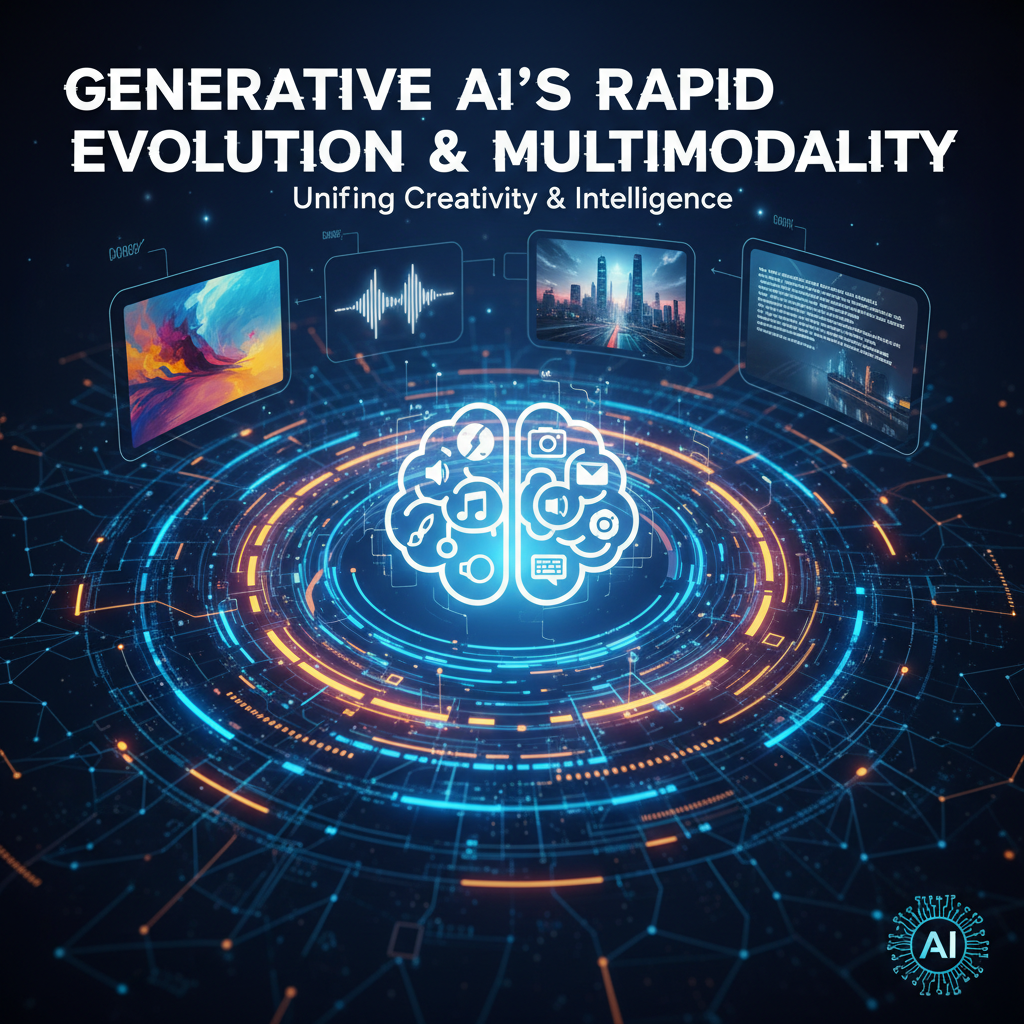
Generative AI’s Rapid Rise: Embracing Multimodality
It feels like just yesterday we were marveling at AI generating simple text. Fast forward to today, and the world of Generative AI is not just walking, it’s sprinting! The pace of innovation is breathtaking, and one of the most exciting frontiers is its swift evolution towards multimodality. Let’s dive into this dynamic landscape.
The Blazing Pace of Progress
Remember when AI-generated images were often quirky and imperfect? Or when text generators sometimes struggled with coherence? The past few years have seen an exponential leap in quality and capability. Models are becoming incredibly sophisticated, generating hyper-realistic images, compelling prose, lifelike audio, and increasingly, even video, all from simple prompts. This rapid evolution isn’t just about better output; it’s about improved understanding, greater accessibility for creators, and a growing ability for these systems to tackle complex, nuanced tasks with impressive flair.
What Does Multimodality Mean for AI?
At its heart, multimodality means that AI models are no longer confined to a single type of data, like just text or just images. Instead, they can understand, process, and generate content across multiple modalities simultaneously. Imagine an AI that can:
- Generate an image from a text description (text-to-image).
- Describe what’s happening in an image or video (image-to-text / video-to-text).
- Create a piece of music based on an emotional prompt (text-to-audio).
- Animate a character from a script (text-to-video).
This cross-pollination of data types allows for a much richer and more intuitive interaction with AI. It’s moving beyond a simple command-response system to one that more closely mirrors how humans perceive and interact with the world around us.
Unleashing New Creative Possibilities
The implications of multimodal AI are truly transformative. For creatives, it’s like having a team of brilliant assistants at your fingertips. Designers can instantly visualize concepts, marketers can generate diverse ad content faster, and educators can create engaging, multimedia learning materials with unprecedented ease. It democratizes complex creation processes, allowing individuals without specialized skills to bring their ideas to life in powerful new ways.
Beyond creative industries, multimodality is enhancing accessibility (e.g., AI describing visual content for the visually impaired), improving scientific research (e.g., correlating complex data sets across different formats), and paving the way for more intuitive user interfaces in everything from smart homes to advanced robotics.
The Road Ahead: Promise and Potential
While the journey of Generative AI and multimodality is still in its early stages, its rapid evolution signals a future brimming with potential. We’re on the cusp of experiencing AI systems that can seamlessly integrate into our workflows, assist in problem-solving across disciplines, and unlock levels of creativity previously unimaginable. Of course, this rapid progress also brings important discussions around ethics, responsible deployment, and societal impact, which are crucial as we continue to build and integrate these powerful tools.
The future of Generative AI is not just multimodal; it’s collaborative, dynamic, and undeniably exciting. Get ready to witness a whole new era of innovation!

Leave a Reply