
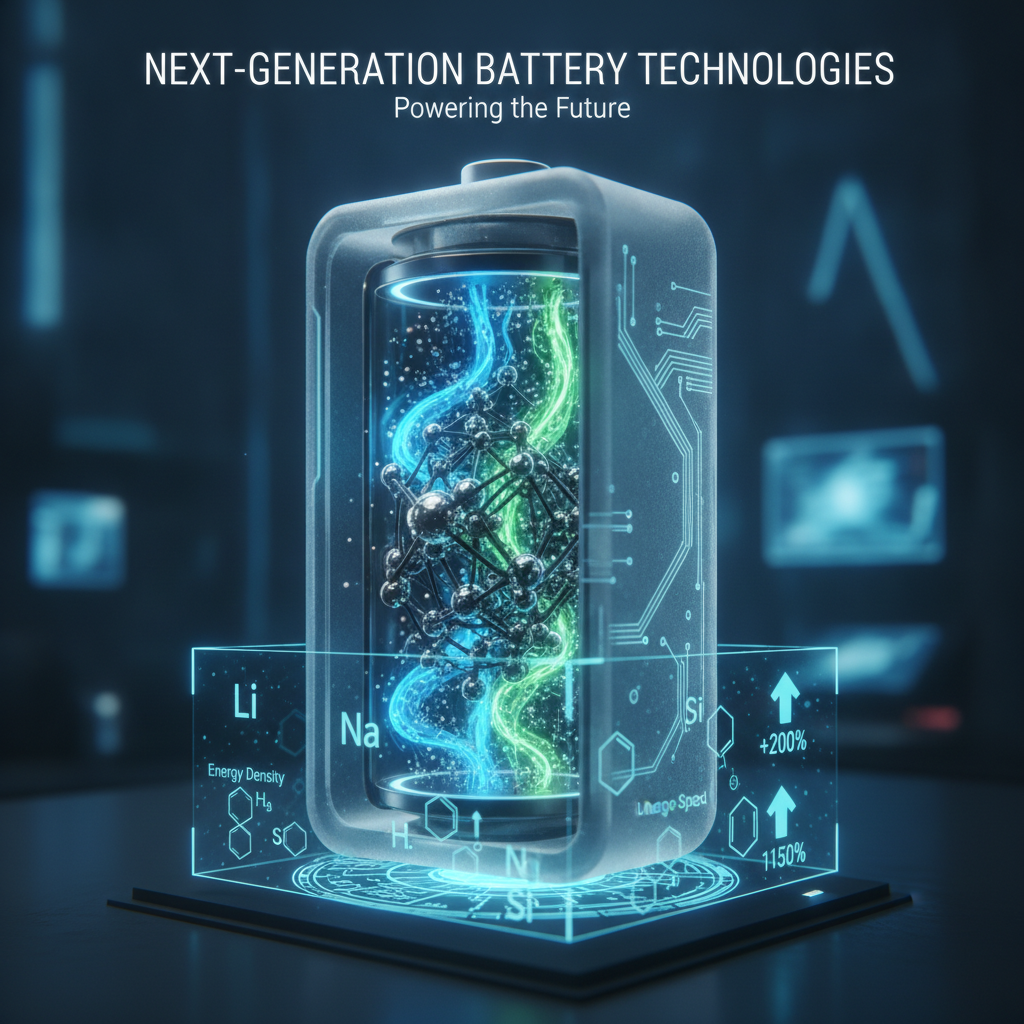
Powering Tomorrow: Next-Generation Battery Technologies
Imagine a world where your electric car charges in minutes, your smartphone lasts for days, and renewable energy is stored effortlessly on a massive scale. This isn’t science fiction; it’s the exciting promise of next-generation battery technologies! While lithium-ion batteries have revolutionized our modern world, they’re approaching their practical limits. Thankfully, brilliant minds worldwide are working on groundbreaking solutions to power our future.
The Urgent Need for Better Batteries
Lithium-ion batteries have served us incredibly well, powering everything from our laptops to electric vehicles. However, they come with challenges: limited energy density, concerns about rare earth minerals, charging times, degradation over time, and in some cases, safety risks. As our demand for portable power and sustainable energy storage grows, the need for more efficient, safer, and environmentally friendly battery solutions becomes paramount.
Solid-State Batteries: A Glimpse into the Future
Perhaps the most talked-about “holy grail” in battery tech, solid-state batteries replace the flammable liquid electrolyte found in traditional lithium-ion batteries with a solid material. This change brings a host of benefits:
- Enhanced Safety: No more risk of thermal runaway or fire, making them incredibly safer.
- Higher Energy Density: Potentially allowing for much longer ranges in EVs or extended use in devices.
- Faster Charging: The potential for significantly quicker recharge times.
- Longer Lifespan: Expected to degrade slower than their liquid counterparts.
While still facing manufacturing hurdles and cost challenges, companies like Toyota, Samsung, and QuantumScape are making significant progress, and we could see them in commercial products sooner than you think!
Beyond Lithium-Ion: Exploring New Chemistries
The innovation doesn’t stop with solid-state. Researchers are exploring entirely new chemistries that could unlock unprecedented performance:
Lithium-Sulfur Batteries
These batteries could offer significantly higher energy densities than lithium-ion, thanks to sulfur’s high theoretical capacity. They’re also potentially lighter and use more abundant materials. The main challenge? Overcoming degradation issues and extending their cycle life.
Sodium-Ion Batteries
Sodium is far more abundant and cheaper than lithium. While currently having lower energy density, breakthroughs are rapidly improving their performance, making them a strong contender for stationary grid storage and potentially even lower-cost EVs where weight isn’t the primary concern.
Redox Flow Batteries
Unlike traditional batteries that store energy in solid electrodes, flow batteries store energy in liquid electrolytes contained in external tanks. This makes them ideal for large-scale, long-duration energy storage (think utility grids), as their capacity can be easily scaled by simply increasing the size of the tanks.
The Road Ahead: Impact and Innovation
These next-generation battery technologies are poised to transform multiple sectors:
- Electric Vehicles: Longer range, faster charging, and safer cars.
- Renewable Energy Storage: Making solar and wind power truly dispatchable, storing excess energy for when it’s needed.
- Portable Electronics: Devices that last for days on a single charge.
- Grid Modernization: Stabilizing power grids and integrating more renewables efficiently.
The journey to commercializing these advanced batteries is complex, requiring immense research, investment, and collaboration. However, the pace of innovation is accelerating, promising a future powered by cleaner, more efficient, and safer energy storage solutions. Get ready to witness a power revolution!
“`



Leave a Reply