
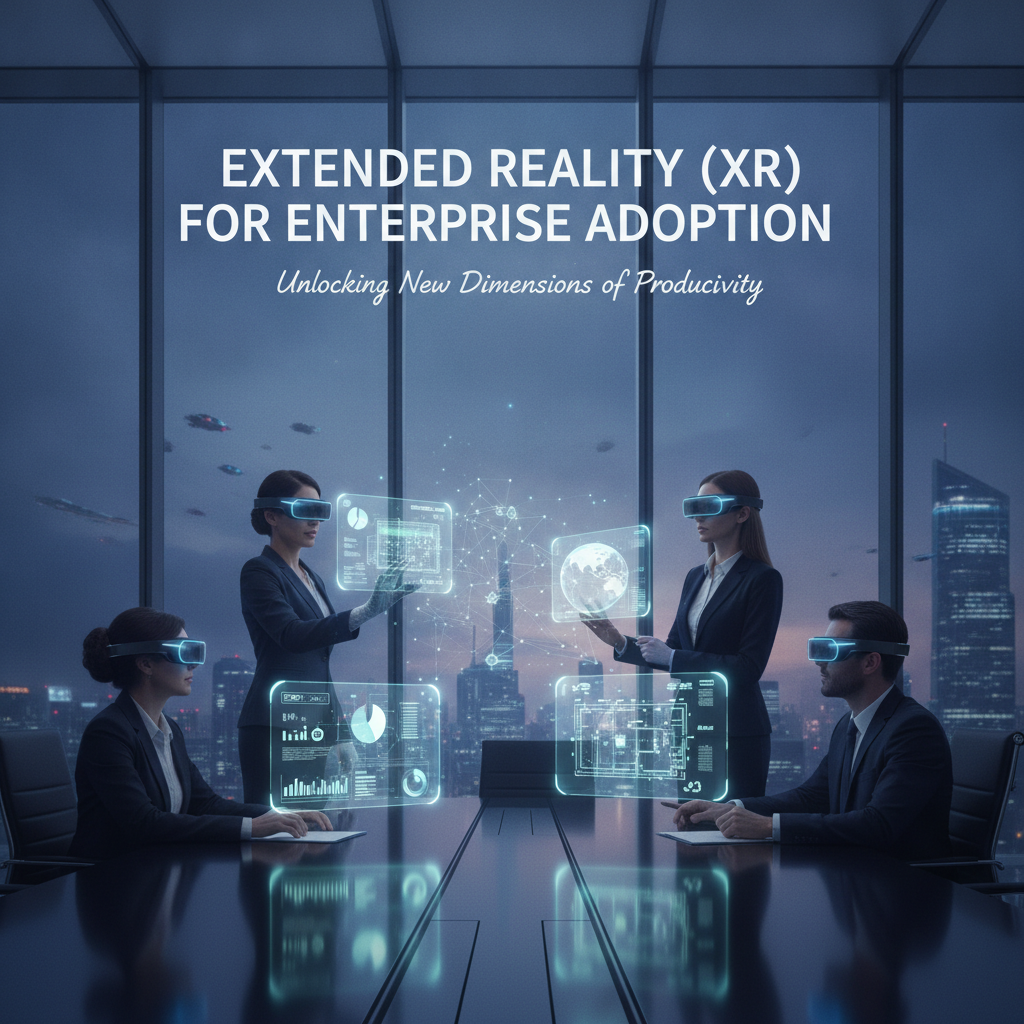
XR for Enterprise: Unlocking Business Potential
Extended Reality (XR) might sound like something out of a sci-fi movie, but it’s rapidly moving from the realm of futuristic fantasy to a tangible tool for enterprise innovation. Comprising Virtual Reality (VR), Augmented Reality (AR), and Mixed Reality (MR), XR is no longer just for gaming or entertainment. Businesses across various sectors are discovering its immense potential to transform operations, enhance productivity, and create unprecedented value.
Understanding the XR Landscape for Business
Before diving into adoption, let’s quickly demystify XR. Virtual Reality (VR) fully immerses users in a simulated digital environment. Think training simulations or virtual tours. Augmented Reality (AR) overlays digital information onto the real world, often via a smartphone or tablet camera – great for guided repairs or interactive marketing. Mixed Reality (MR) blends digital objects with the real world in a way that allows them to interact, offering the most sophisticated spatial computing experience.
For enterprises, XR isn’t about replacing reality; it’s about augmenting it to solve real-world problems and unlock new opportunities that traditional methods can’t address as effectively.
Key Benefits of XR for Enterprise Adoption
The business case for XR is compelling, offering a range of strategic advantages:
Enhanced Training and Development
Imagine training highly skilled technicians on complex machinery without ever needing to touch the physical equipment, or running safety drills in high-risk environments virtually. XR provides immersive, repeatable, and safe training simulations that boost retention rates, reduce costs, and minimize risks associated with on-the-job learning. From surgeons practicing intricate procedures to assembly line workers learning new protocols, the possibilities are vast.
Revolutionizing Remote Collaboration
In an increasingly globalized and remote-first world, XR bridges geographical gaps like never before. Teams can collaborate on 3D models in a shared virtual space, conduct virtual meetings with lifelike avatars, or allow remote experts to provide real-time guidance to on-site personnel using AR overlays. This not only improves efficiency but also fosters a stronger sense of connection and understanding.
Streamlining Operations and Design
From product design and prototyping to maintenance and quality control, XR accelerates cycles and reduces errors. Engineers can visualize and iterate on designs in 3D before a single physical prototype is built. Field service technicians can use AR to access repair manuals or receive remote expert assistance, reducing downtime and improving first-time fix rates. Manufacturing can leverage MR for guided assembly and inspection, ensuring precision and compliance.
Transforming Customer Engagement
XR offers innovative ways to connect with customers. Retailers can provide virtual try-on experiences for clothing or furniture placement in a customer’s home using AR. Real estate agents can offer immersive virtual property tours. These engaging experiences not only differentiate brands but also build stronger customer relationships and drive sales.
Navigating the Path to XR Adoption
While the benefits are clear, adopting XR isn’t without its considerations. Enterprises need to carefully plan their strategy:
Starting Small with Pilot Programs
Instead of a full-scale rollout, many successful adopters begin with pilot projects. Identify a specific business problem or opportunity, deploy a targeted XR solution, and measure its impact. This iterative approach allows for learning, refinement, and building internal confidence before broader implementation.
Infrastructure and Integration
XR solutions often require robust network infrastructure, powerful hardware, and seamless integration with existing enterprise systems (like CAD, ERP, or CRM). Planning for these technical requirements early is crucial to avoid bottlenecks and ensure a smooth rollout.
Skills and Talent Development
To fully leverage XR, organizations need to invest in upskilling their workforce. This includes training users on new XR devices and applications, as well as developing internal expertise in XR content creation, development, and maintenance.
Data Security and Privacy
As with any emerging technology, ensuring the security of sensitive enterprise data and user privacy within XR environments is paramount. Robust security protocols and compliance with relevant regulations must be a core part of the adoption strategy.
The Future is Extended
Extended Reality is no longer just a futuristic concept; it’s a powerful suite of technologies ready to redefine how businesses operate, innovate, and connect. By strategically exploring its applications, starting with clear objectives, and addressing key considerations, enterprises can unlock significant value and secure a competitive edge in the evolving digital landscape. The journey into XR is an investment in a more efficient, collaborative, and engaging future.



Leave a Reply