
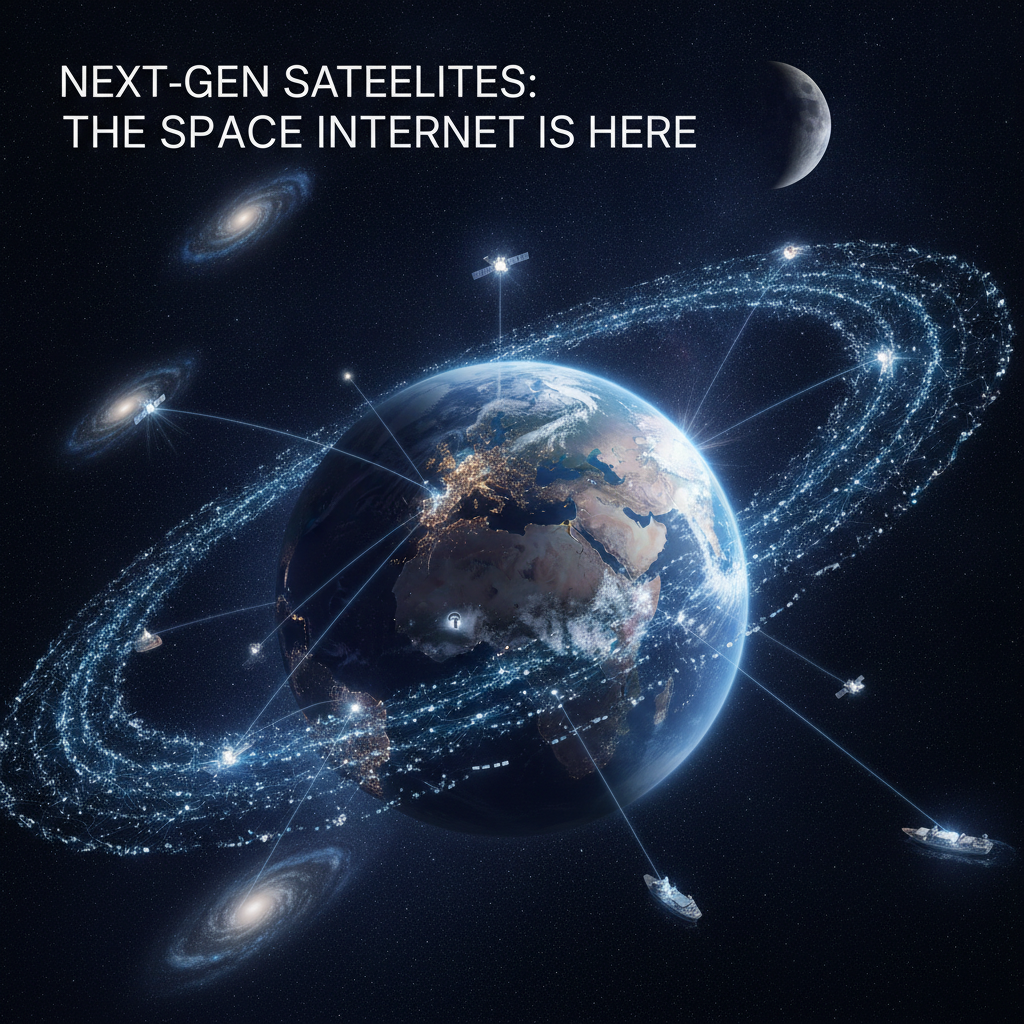
Orbiting Towards a Connected Future
Imagine a world where high-speed internet is available everywhere, from the most remote villages to the middle of the ocean. This isn’t science fiction anymore! Next-generation satellite constellations are rapidly turning this vision into a reality, promising to revolutionize how we connect with the world and each other.
The Promise of Global Connectivity
For decades, internet access has been a luxury for many, limited by the reach of physical cables and ground-based infrastructure. While fiber optics have brought incredible speeds to urban areas, vast swathes of our planet remain underserved or entirely unconnected. This “digital divide” impacts education, healthcare, economic development, and social inclusion.
Enter space internet! Next-generation satellite constellations are designed to bridge this gap, offering a pervasive, low-latency broadband solution from orbit. This means no more waiting for infrastructure to be laid across difficult terrain or vast distances – the internet simply comes from above.
What are Next-Gen Satellite Constellations?
Unlike traditional geostationary satellites, which orbit very high (around 36,000 km) and can suffer from significant signal latency, these new constellations operate in Low Earth Orbit (LEO), typically between 500-1,200 km altitude. This much closer proximity dramatically reduces the time it takes for data to travel, making for a much more responsive internet experience.
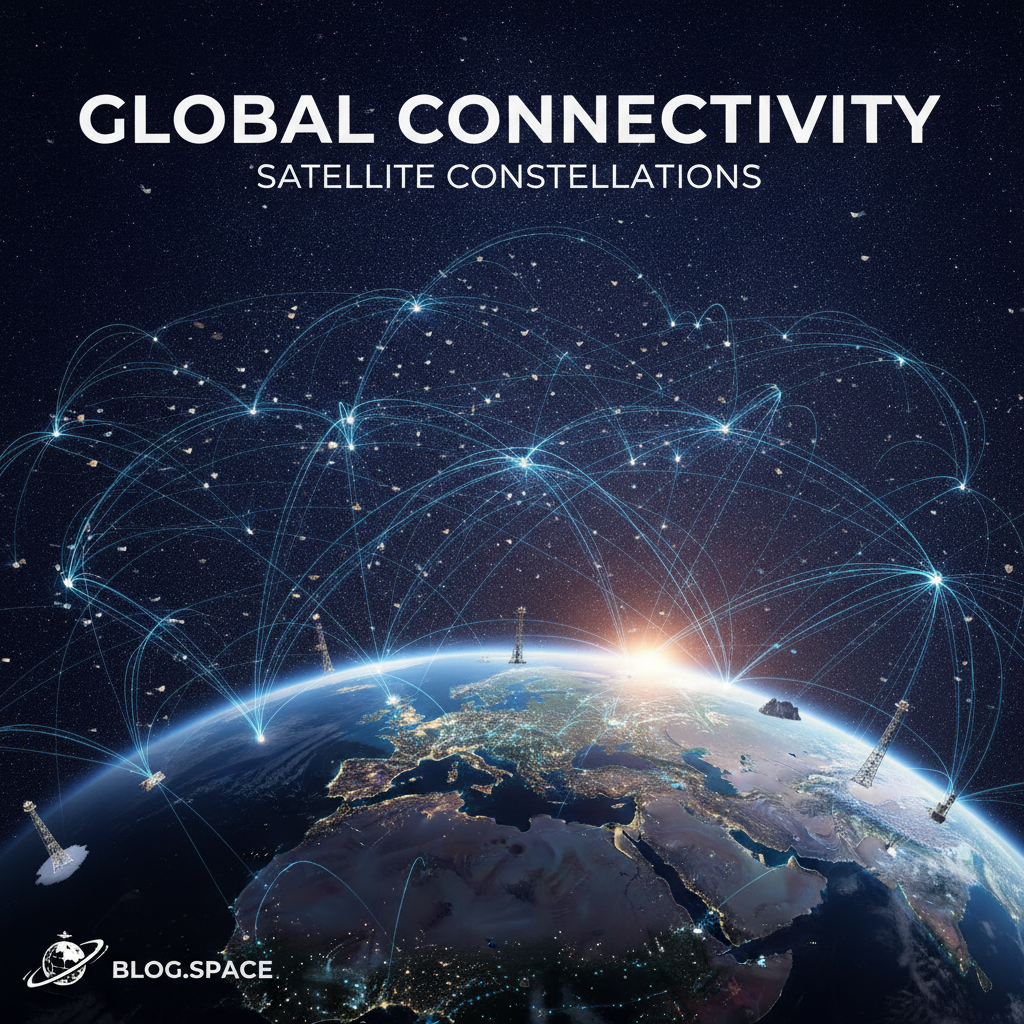
Crucially, instead of one or two large satellites, these are vast networks comprising hundreds or even thousands of smaller, interconnected satellites. This swarm of orbiting spacecraft works together to provide continuous coverage, passing data seamlessly between satellites and down to ground stations, ensuring a consistent and reliable connection wherever you are.
Beyond Connectivity: Broader Impacts
While global internet access is the headline, the implications of space internet stretch far wider. Consider these transformative possibilities:
- Bridging the Digital Divide: Bringing educational resources, telemedicine, and economic opportunities to underserved communities.
- Disaster Relief: Providing crucial communication links when terrestrial networks are damaged or unavailable.
- IoT and Autonomous Vehicles: Enabling seamless data transfer for the growing Internet of Things ecosystem and future self-driving cars, ships, and drones.
- Enhanced Aviation and Maritime Services: Offering reliable, high-speed internet to planes and ships, transforming travel experiences and operational efficiency.
These constellations are not just about getting online; they’re about creating a more interconnected, informed, and resilient global society.
Navigating the Challenges Ahead
The journey to a fully space-connected world isn’t without its hurdles. Concerns about space debris, the visual impact of thousands of satellites on astronomy, and the need for international regulatory frameworks are all important considerations being actively addressed by operators and governments alike. Additionally, the sheer scale of manufacturing, launching, and maintaining these constellations presents significant engineering and financial challenges.
However, the rapid pace of innovation and collaboration within the space industry suggests that solutions are within reach. As technology advances and operational efficiencies improve, the dream of truly ubiquitous, high-speed space internet moves closer to reality.
The era of next-generation satellite constellations is here, promising a future where connectivity is no longer a privilege but a universal utility. Get ready for a world where your internet comes from the ultimate high ground – space!
“`


Leave a Reply