
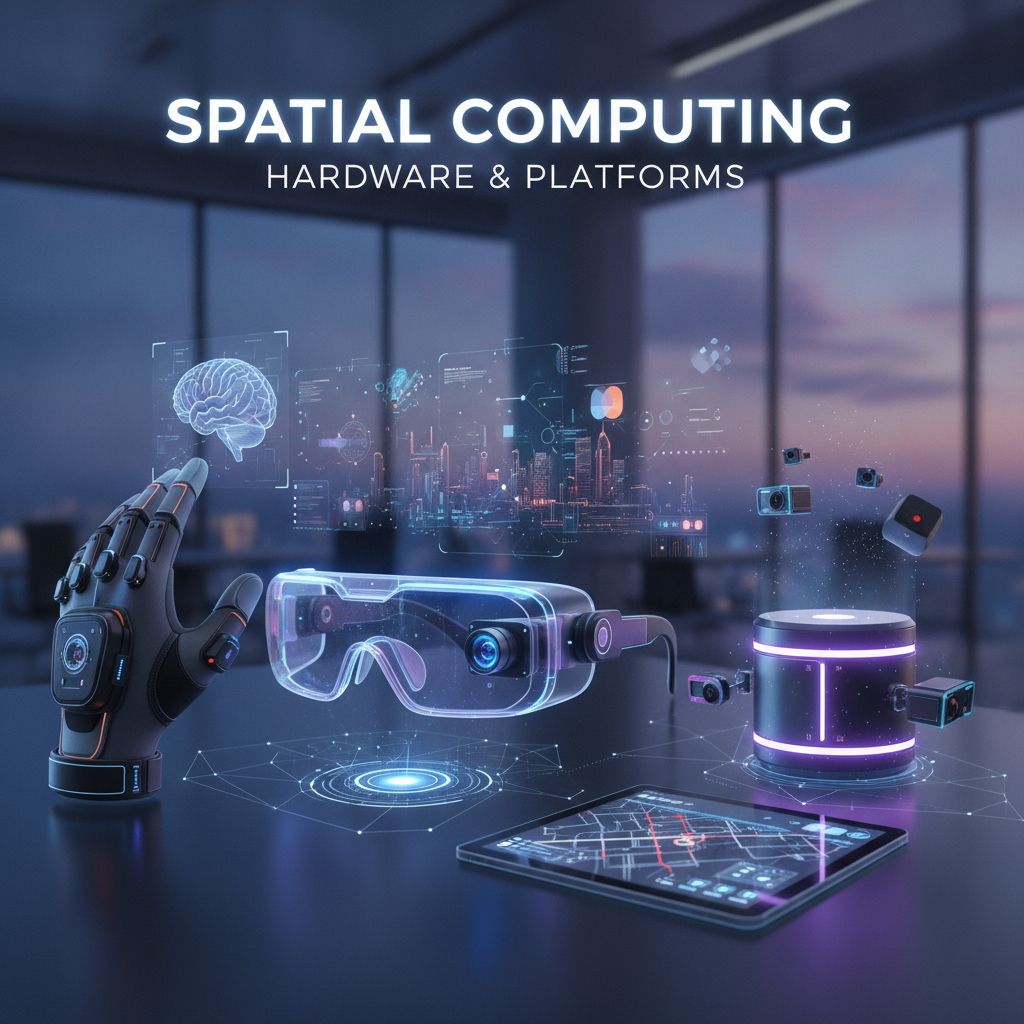
Spatial Computing: The Hardware & Software Unveiled
Ever wondered what it feels like to blend the digital world seamlessly with our physical reality? Welcome to the realm of Spatial Computing! It’s not just a buzzword; it’s a revolutionary paradigm that promises to transform how we interact with technology, information, and each other. But what truly powers this incredible vision? It all comes down to robust hardware and sophisticated software platforms working in harmony. Let’s dive in!
The Cutting-Edge Hardware Driving the Experience
At the heart of spatial computing are the devices that bridge the gap between bits and atoms. These aren’t just your standard computers; they’re specialized machines designed for immersion and interaction within a blended reality.
Think about the immersive headsets like Apple Vision Pro, Meta Quest series, and Microsoft HoloLens. These devices combine high-resolution displays, advanced optics, and an array of sensors (cameras, depth sensors, IMUs) to understand your environment and track your movements. Beyond headsets, we’re seeing specialized input devices, haptic feedback systems, and even portable computing units that offload processing for sleeker designs.
The innovation isn’t just in the visible parts. Powerful, compact processors (like Qualcomm’s Snapdragon XR platforms or Apple’s M-series chips), custom-designed lenses, and ultra-low-latency tracking systems are continually evolving to make the experience more comfortable, realistic, and accessible.
The Software Platforms: Architects of New Realities
Hardware is the muscle, but software platforms are the brains. These platforms provide the operating systems, development tools, and frameworks that allow developers to create compelling spatial experiences. Without them, even the most advanced hardware would just be a fancy paperweight.
Key players here include:
- visionOS (Apple): The operating system powering Apple Vision Pro, known for its intuitive gestural interface and deep integration with Apple’s ecosystem.
- Meta Horizon OS (Meta): The foundational platform for Meta Quest devices, offering a robust environment for VR and mixed reality applications.
- OpenXR: A royalty-free, open standard that aims to simplify AR/VR development by providing a common API across different hardware platforms. This is crucial for ecosystem growth!
- Unity & Unreal Engine: These powerful game engines have become indispensable tools for spatial content creation, offering extensive features for 3D rendering, physics, and interaction design.
- Cloud-based Services: Platforms like Azure Spatial Anchors or AWS Sumerian provide services for persistent spatial experiences, multi-user collaboration, and large-scale asset streaming.
These platforms handle everything from rendering complex 3D environments and processing sensor data to managing user interfaces and enabling network interactions. They are the canvases upon which the next generation of digital experiences will be painted.
Synergy and the Road Ahead
The true magic of spatial computing lies in the synergy between its hardware and software components. Breakthroughs in one often push the boundaries of the other. As hardware becomes more powerful and discreet, software can deliver more sophisticated and seamless experiences. Conversely, innovative software paradigms can drive demand for new hardware capabilities.
While the journey is just beginning, the rapid advancements in both areas are incredibly exciting. From transforming industries like healthcare and manufacturing to revolutionizing entertainment and social interaction, spatial computing is poised to redefine our relationship with technology. Keep an eye on this space – the future is unfolding before our very eyes!


Leave a Reply