
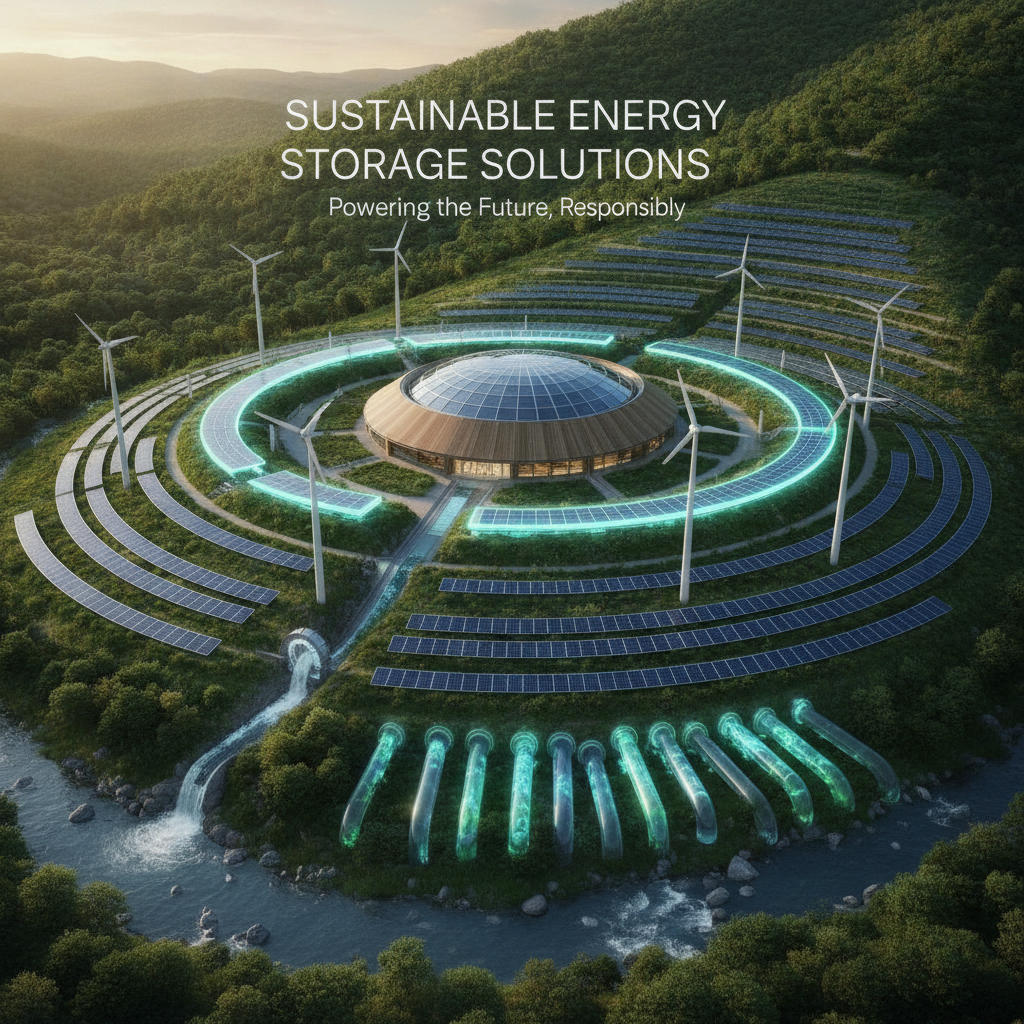
Storing Green Energy: Sustainable Solutions Now
The global shift towards renewable energy sources like solar and wind power is fantastic news for our planet! However, there’s a big question that often arises: what happens when the sun isn’t shining or the wind isn’t blowing? This is where energy storage comes into play, and increasingly, the focus is turning to sustainable energy storage solutions. It’s not enough to generate clean energy; we also need to store it cleanly and efficiently.
Why Sustainable Storage Matters More Than Ever
Traditional energy storage, predominantly lithium-ion batteries, has been a game-changer. But as we scale up, concerns about raw material extraction (like cobalt and lithium), manufacturing footprints, and end-of-life recycling challenges are growing. To truly build a sustainable energy future, our storage solutions must also align with our environmental goals. This means exploring options that are resource-efficient, less toxic, have longer lifespans, and are easier to recycle.
Flow Batteries: A Liquid Approach to Long-Duration Storage
Imagine a battery where the energy-storing components are liquids held in external tanks, rather than embedded within solid electrodes. That’s the essence of flow batteries! Technologies like vanadium redox flow batteries (VRFBs) offer incredible scalability, long cycle life (they can be charged and discharged thousands of times without significant degradation), and safety. Because the power and energy components are separate, they can be designed for very long discharge durations, making them ideal for grid-scale applications. Plus, they often use more abundant and less toxic materials than conventional batteries.
Thermal Energy Storage: Harnessing Heat for Later
Sometimes, the simplest solutions are the most effective. Thermal energy storage involves capturing heat (or cold) and storing it for later use. This is particularly relevant for concentrated solar power (CSP) plants, where molten salts can store heat at very high temperatures, allowing the plant to generate electricity even after sunset. But it’s not just for large power plants; innovations in thermal storage can also help in buildings, storing excess solar heat for warmth or using phase-change materials for cooling, reducing reliance on conventional heating and air conditioning.
Gravity-Based Storage: What Goes Up Must Come Down
Pumped-hydro storage is the oldest and largest form of energy storage globally, using excess electricity to pump water uphill to a reservoir, then releasing it to generate power when needed. Building on this principle, newer gravity-based systems are emerging. Companies are developing innovative solutions that use electric motors to lift heavy blocks or weights, storing potential energy. When power is needed, the weights are lowered, driving generators. These systems boast extremely long lifespans, use common, durable materials (like concrete or composite blocks), and have minimal environmental impact compared to large reservoirs.
Hydrogen: The Ultimate Long-Term Storage Potential
Hydrogen is a powerhouse of potential when it comes to long-term, large-scale energy storage. Excess renewable electricity can be used to produce “green hydrogen” through electrolysis of water. This hydrogen can then be stored in tanks, caverns, or even repurposed pipelines, and later converted back into electricity via fuel cells or used directly as a clean fuel. While there are still efficiency challenges and infrastructure development needs, green hydrogen offers a pathway to store vast amounts of energy for weeks or months, bridging seasonal gaps in renewable energy supply.
The Road Ahead: Innovation and Integration
Embracing sustainable energy storage isn’t just about finding alternatives; it’s about building a more resilient, efficient, and truly green energy infrastructure. Each of these solutions has its unique advantages and ideal applications. The future will likely see a diverse portfolio of these technologies working together, optimized for different needs—from short-term grid stability to long-duration seasonal storage. By prioritizing sustainability in our storage choices, we can ensure that our transition to a renewable energy future is as clean and responsible as possible, from generation to consumption.
“`



Leave a Reply