
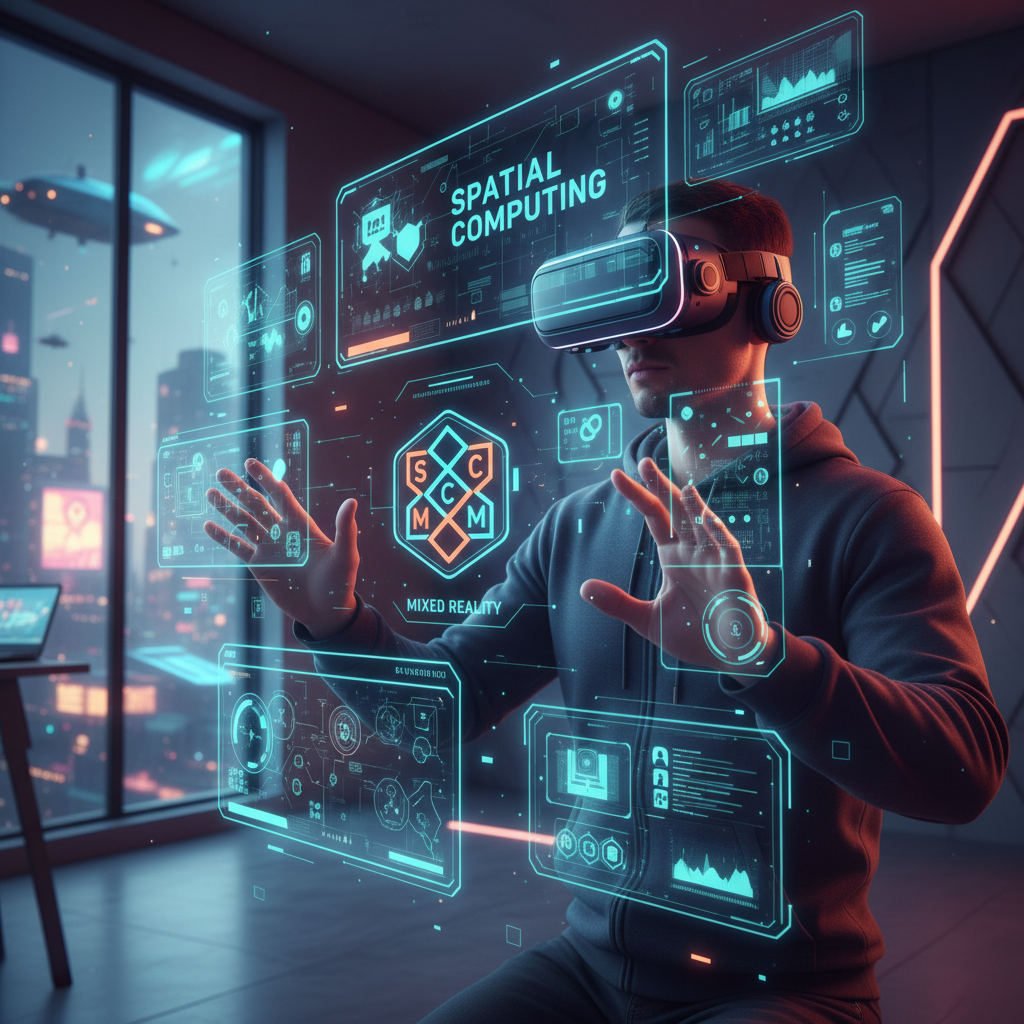
Unlocking New Realities: Spatial Computing & Mixed Reality
Welcome to the Next Dimension of Interaction
Imagine a world where your digital tools aren’t confined to a screen, but exist all around you, seamlessly integrated with your physical environment. This isn’t science fiction; it’s the exciting frontier of Spatial Computing and Mixed Reality (MR). Prepare to move beyond flat screens and step into an interactive, three-dimensional world where data, people, and places converge in unprecedented ways.
What Exactly is Spatial Computing?
At its core, Spatial Computing is about computers understanding and interacting with our physical world, including objects, spaces, and even people, in three dimensions. It’s the technology that allows digital content to exist and operate within a real-world context, rather than just being projected onto it. Think of devices like Apple Vision Pro, Microsoft HoloLens, or Magic Leap – they’re not just showing you digital overlays; they’re allowing you to manipulate and interact with digital objects as if they were physically present, anchored to your surroundings.
Mixed Reality: Blending Worlds, Not Just Overlaying
While often used interchangeably with Augmented Reality (AR) or Virtual Reality (VR), Mixed Reality (MR) truly sits at the intersection. VR fully immerses you in a digital world, blocking out reality. AR overlays digital information onto your real world. MR, however, goes a step further: it creates a continuum where digital and physical objects co-exist and interact with each other in real-time. This means a digital architect’s model could realistically cast shadows on your real desk, or a virtual character could walk behind a physical chair in your room. It’s about persistence, interaction, and environmental understanding.
Transformative Applications Across Industries
The potential of Spatial Computing and Mixed Reality is staggering, promising to revolutionize countless sectors:
- Healthcare: Surgeons can plan complex operations with 3D models overlaid directly onto the patient, or medical students can practice procedures on holographic anatomy.
- Design & Manufacturing: Engineers can collaborate on 3D prototypes in real-time, making adjustments to digital designs that interact with physical objects on the factory floor.
- Education: Learning becomes deeply immersive, allowing students to explore historical sites virtually, dissect digital organs, or walk through solar systems.
- Retail & Marketing: Customers can try on virtual clothes or visualize furniture in their homes before buying, enhancing the shopping experience.
- Entertainment: Gaming and storytelling reach new heights, pulling players directly into interactive narratives that blend with their actual surroundings.
The Future is Spatial: What’s Next?
We are still in the early chapters of the Spatial Computing and Mixed Reality story, but the pace of innovation is accelerating. As hardware becomes more powerful, comfortable, and affordable, and as developers unlock new creative possibilities, these technologies will move beyond niche applications into our everyday lives. From smart homes that anticipate our needs to intuitive navigation systems that guide us through complex environments, the spatial web promises a more intuitive, interconnected, and engaging way to experience the world.
The journey into spatial computing is an invitation to redefine our relationship with technology and discover new dimensions of interaction. Are you ready to step in?


Leave a Reply