
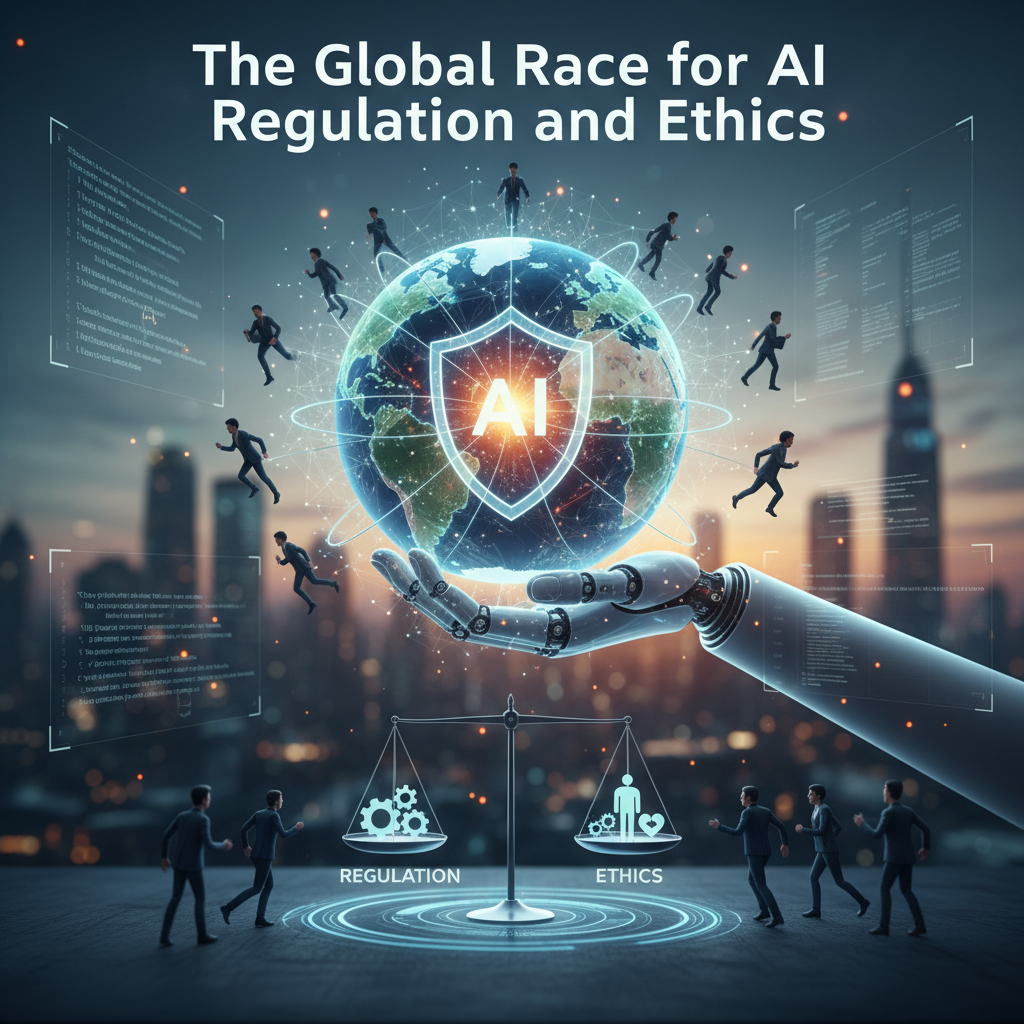
AI’s Ethical Crossroads: The Global Regulatory Push
Artificial intelligence is no longer a futuristic concept; it’s a powerful force reshaping our world at an astonishing pace. From revolutionizing industries to transforming daily life, AI’s potential is boundless. Yet, with great power comes great responsibility. As AI capabilities accelerate, so too does the global conversation around its regulation and ethical governance. We’re witnessing a truly worldwide race to establish frameworks that ensure AI benefits humanity without compromising our values or safety.
The Urgent Need for Guardrails
Why the sudden rush for rules? The reasons are multifaceted and critical. Concerns range from algorithmic bias perpetuating and even amplifying societal inequalities, to questions of data privacy and surveillance. There are also significant anxieties about AI’s impact on employment, the potential for autonomous weapons, and the overall transparency and accountability of increasingly complex systems. Without thoughtful regulation, the risks of AI could overshadow its immense benefits, leading to unintended consequences that affect everyone.
A Patchwork of Global Approaches
The global community isn’t sitting still. Nations and blocs are actively developing their own strategies, creating a fascinating, albeit complex, landscape. The European Union, for instance, is leading with its ambitious AI Act, a comprehensive, risk-based legislative framework aiming to set a global standard. Across the Atlantic, the United States is leaning towards a more sector-specific, voluntary approach, emphasizing innovation while encouraging responsible development. Meanwhile, countries like China are implementing regulations focused on algorithmic accountability and data security. This diverse set of strategies highlights the challenge of harmonizing standards across different legal, economic, and cultural contexts.
Navigating the Ethical Maze
Beyond legal statutes, the ethical considerations of AI are paramount. How do we ensure fairness and prevent discrimination? What does true transparency and explainability look like when algorithms are so intricate? Who is accountable when an AI system makes a mistake, or worse, causes harm? These aren’t just academic questions; they are fundamental dilemmas that demand careful consideration. Principles like human oversight, robustness, privacy-by-design, and environmental sustainability are becoming pillars in the quest to build AI that aligns with human values and serves the greater good.
Balancing Innovation and Safety
One of the trickiest aspects of this global race is striking the right balance. Regulators face the daunting task of establishing safeguards without stifling the very innovation that drives progress. Too stringent rules could hinder research and development, potentially causing regions to fall behind. Too lenient, and we risk widespread misuse and ethical breaches. The consensus forming is that a collaborative approach is essential, involving governments, industry leaders, academia, and civil society. Adaptive regulation, which can evolve as AI technology matures, is also seen as key to navigating this rapidly changing landscape.
The global race for AI regulation and ethics isn’t just about setting rules; it’s about shaping the future of humanity. It’s a testament to our collective responsibility to harness this powerful technology wisely and ethically. By fostering international dialogue, prioritizing human values, and embracing a spirit of cautious optimism, we can ensure that AI truly becomes a force for good, paving the way for a more intelligent, equitable, and sustainable world for all.
“`



Leave a Reply