Beyond Text: Unlocking the Future with Advanced Generative AI & Multimodal Models
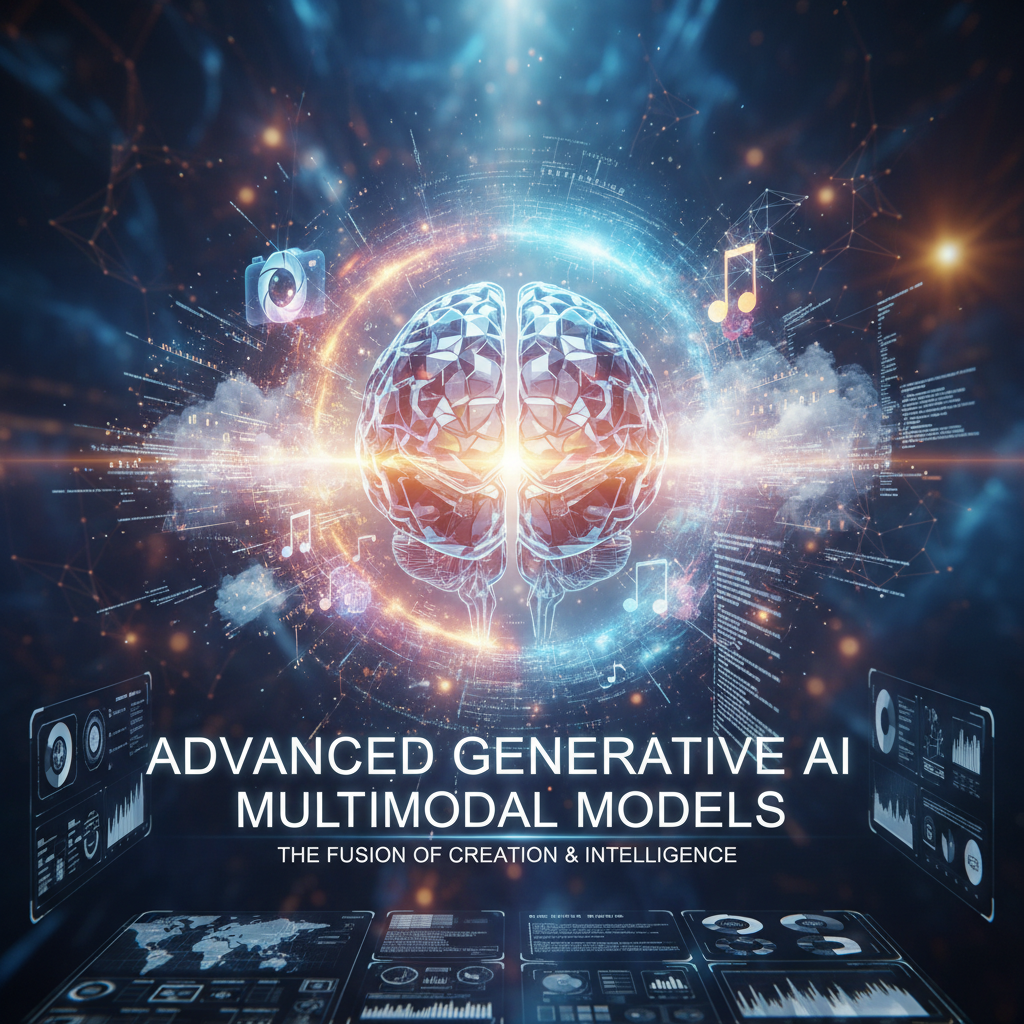
We’re living through an exciting era of rapid innovation, and at the forefront of this revolution are Advanced Generative AI and Multimodal Models. These aren’t just incremental improvements; they represent a significant leap forward, pushing the boundaries of what AI can create, understand, and interact with. If you thought text generation was impressive, prepare to be amazed by what comes next!
What Makes Generative AI “Advanced”?
When we talk about “Advanced” Generative AI, we’re moving beyond simple text completion or basic image generation. These models are characterized by several key capabilities:
- Deeper Understanding: They grasp context, nuance, and even intent with remarkable precision.
- Complex Reasoning: They can engage in multi-step problem-solving, code generation, and even scientific discovery.
- Emergent Abilities: Unexpected capabilities arise from their sheer scale and training data, like self-correction or advanced world knowledge.
- Finer Control: Users can exert more granular control over the output, guiding the AI to produce highly specific and tailored creations.
These sophisticated models are the architects behind some of the most impressive AI feats we’ve seen recently, moving AI from a helpful tool to a true creative and intellectual partner.
The Multimodal Revolution: Bridging Different Worlds
Perhaps the most exciting development is the rise of Multimodal Models. Humans perceive the world through a rich tapestry of senses: sight, sound, touch, and language. Traditional AI models often specialized in one domain – processing text, analyzing images, or understanding audio.
Multimodal models break down these silos. They are designed to process and understand information from multiple modalities simultaneously. Imagine an AI that can:
- Take an image and a text prompt to generate a new, stylized image (e.g., “draw this cat as a renaissance painting”).
- Watch a video, listen to its audio, and then describe the events, summarize conversations, and even predict future actions.
- Receive a complex query combining text and diagrams, and then provide an accurate, insightful answer.
This ability to seamlessly integrate and reason across different types of data (text, images, audio, video) is a game-changer. It allows AI to mimic human perception and cognition more closely, opening up a universe of new applications.
Real-World Impact: Where We See It Now
The implications of advanced generative AI and multimodal models are already profound and are rapidly expanding across various sectors:
- Creativity & Design: From generating stunning visual art and architectural concepts to composing music and crafting immersive stories, these models are empowering creators like never before.
- Education: Personalized learning experiences, interactive tutorials, and automated content generation can revolutionize how we learn.
- Healthcare: Assisting in diagnosis by analyzing medical images alongside patient histories, accelerating drug discovery, and generating synthetic data for research.
- Accessibility: Converting visual information into descriptive text for the visually impaired, or translating sign language in real-time.
- Scientific Research: Hypothesis generation, experimental design, and data interpretation, significantly speeding up discovery cycles.
Tools like DALL-E 3, Midjourney, GPT-4V, Google Gemini, and the astonishing Sora for video generation are just the beginning of what’s possible when AI can “see,” “hear,” “read,” and “create” across domains.
Looking Ahead: Challenges and Limitless Potential
While the potential is vast, it’s important to acknowledge the challenges. Ethical considerations around bias, misinformation, intellectual property, and the sheer computational cost of training these massive models remain critical areas of focus. Ensuring responsible development and deployment is paramount.
However, the future is incredibly bright. As these models become even more sophisticated, we can anticipate more seamless human-AI collaboration, personalized experiences tailored to individual needs, and breakthroughs in fields we can barely imagine today. The journey with Advanced Generative AI and Multimodal Models is not just about building smarter machines; it’s about expanding human capability and creativity in unprecedented ways.
What excites you most about this future? Share your thoughts!
“`

Leave a Reply