Unlocking Creativity: The Rise of Multimodal AI
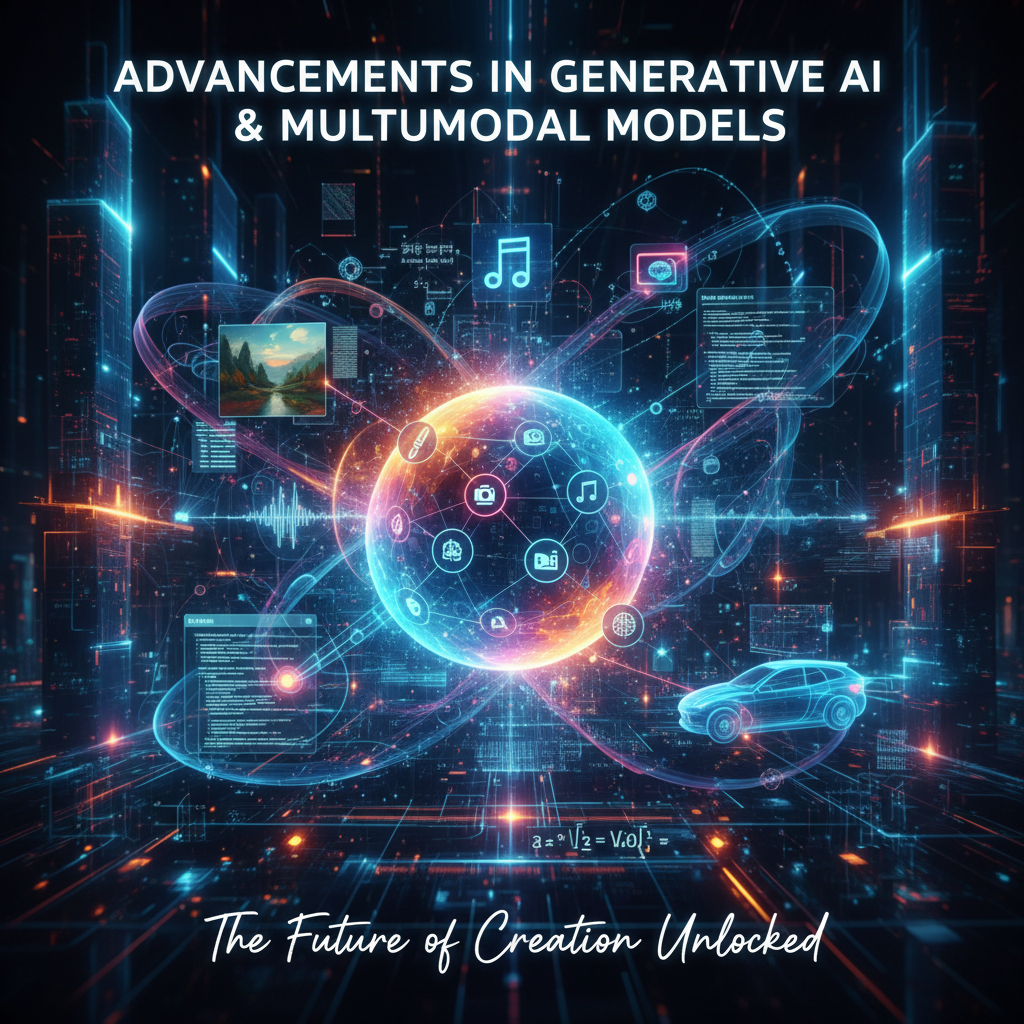
Have you ever imagined an AI that doesn’t just write text, but also understands images, generates videos, and even comprehends spoken language, all at once? What used to be the realm of science fiction is now rapidly becoming our reality thanks to incredible advancements in Generative AI and the emergence of powerful multimodal models. Let’s dive into how these technologies are reshaping our world!
What Exactly is Generative AI (and Why It’s Buzzing)?
At its core, Generative AI refers to AI systems capable of creating new, original content rather than just analyzing or classifying existing data. Think of Large Language Models (LLMs) like ChatGPT, which can write essays, code, or stories that are incredibly coherent and contextually relevant. But it’s not just text anymore! We’re seeing breathtaking progress in AI that generates stunning images from text descriptions (like Midjourney or DALL-E), composes music, and even crafts realistic videos. These models learn complex patterns from vast datasets and then use that knowledge to produce novel outputs that often defy belief.
The Game-Changer: Embracing Multimodality
While generative AI in specific domains is impressive, the true revolution lies in *multimodal* models. Multimodality means an AI can process and generate information across multiple types of data simultaneously – like text, images, audio, and even video. Instead of an AI that only “sees” or only “reads,” a multimodal AI can do both, and much more, allowing for a far richer and more nuanced understanding of the world.
Imagine telling an AI: “Describe this picture for a visually impaired person, then write a poem inspired by its serene landscape, and finally, generate a short calming piece of music that matches the mood.” A multimodal model can tackle such complex, interconnected tasks because it integrates different sensory inputs and outputs, leading to more intelligent and creative responses.
Pioneering Advancements and Real-World Impact
Recent breakthroughs are pushing the boundaries daily. Models like OpenAI’s GPT-4V (Vision) can not only understand and respond to text but also “see” and interpret images, answering questions about their content or even describing what’s happening within them. Image generation models have become incredibly sophisticated, creating photorealistic art or unique designs purely from textual prompts. We’re also seeing the nascent stages of AI that can generate incredibly lifelike videos, transforming simple text into dynamic scenes (think Sora’s promise!).
The impact is profound across industries. For creators, it opens new avenues for digital art, content generation, and storytelling. In education, it promises personalized learning experiences that adapt to different learning styles. For accessibility, it can translate visual information into audio descriptions, making the digital world more inclusive. From scientific research to entertainment, multimodal AI is a powerful accelerator.
What’s Next? A Glimpse into the Future
The trajectory of Generative AI and multimodal models points towards even more integrated, intuitive, and powerful systems. We can anticipate AIs that understand complex human intentions across various mediums, leading to more natural human-computer interaction. Imagine collaborative AI companions that assist with everything from brainstorming creative projects to solving scientific challenges, fluent in every form of communication.
Of course, as with any powerful technology, there are ethical considerations and challenges to address, such as bias, misinformation, and responsible deployment. But one thing is clear: the future of AI is undeniably generative and increasingly multimodal, promising a world where creativity and understanding reach unprecedented heights.
Stay curious, the AI revolution is just getting started!

Leave a Reply