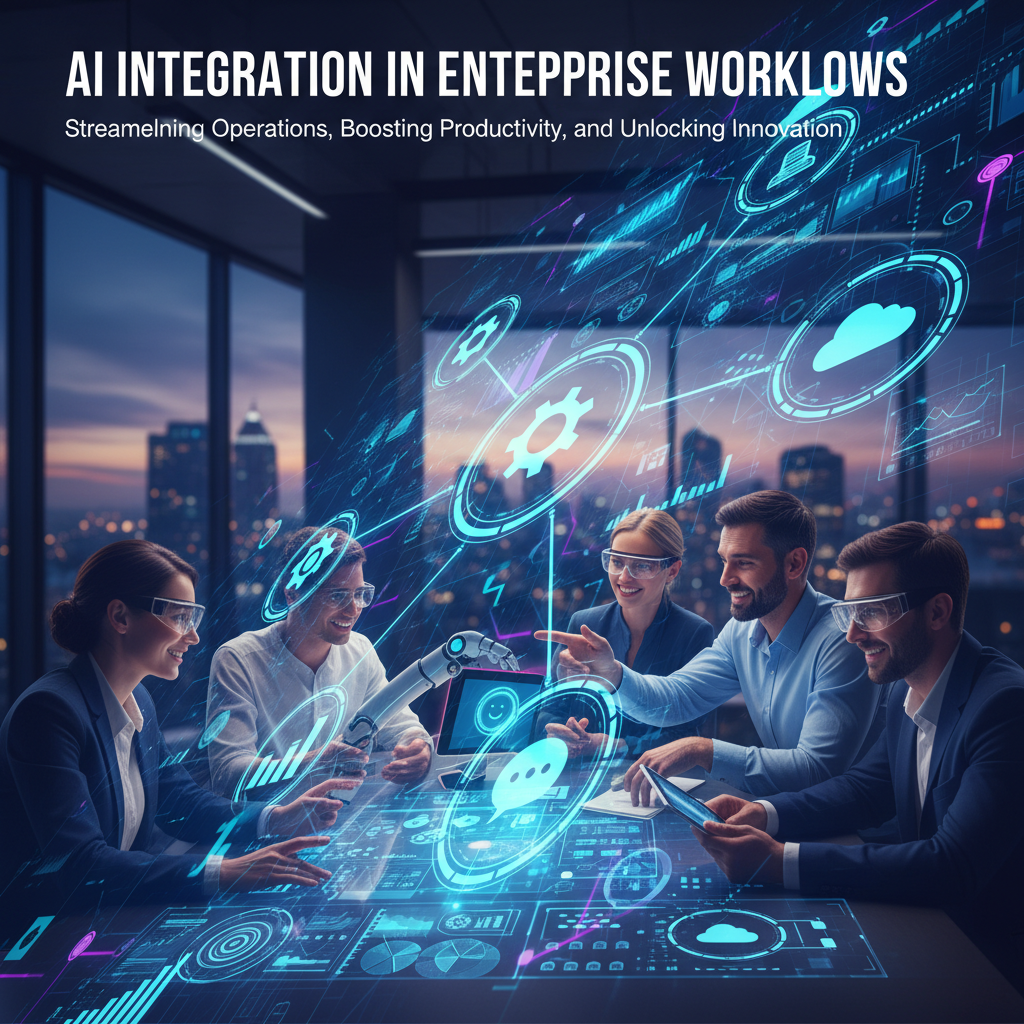
Unlocking Efficiency: AI in Enterprise Workflows
Welcome to the future of work! AI isn’t just a buzzword anymore; it’s rapidly becoming an indispensable part of how businesses operate. Integrating Artificial Intelligence into enterprise workflows is no longer a luxury but a strategic imperative for organizations aiming to boost efficiency, innovate faster, and stay competitive.
Why AI in Enterprise? The Core Advantages
AI integration goes beyond simple automation; it’s about infusing intelligence into every facet of your operations. From routine tasks to complex decision-making, AI offers a suite of benefits that can redefine productivity and growth.
Key advantages include significant efficiency gains through automation, enhanced data-driven decision-making, personalized customer experiences, and substantial cost reductions. It empowers teams to focus on strategic initiatives rather than repetitive chores, leading to a more engaged and productive workforce.
Real-World Applications Across Departments
Wondering where AI can make the biggest splash in your organization? The truth is, it’s virtually everywhere!
Customer Service: AI-powered chatbots and virtual assistants handle inquiries 24/7, freeing up human agents for complex issues and improving overall response times and customer satisfaction.
Human Resources: AI streamlines recruitment processes, from screening resumes to predictive analytics for employee retention, making HR more strategic and efficient.
Finance: AI excels at fraud detection, accurate forecasting, and automating reconciliation tasks, ensuring financial health, compliance, and better strategic planning.
Marketing & Sales: Personalizing customer journeys, optimizing ad spend, and predicting sales trends are just a few ways AI boosts revenue generation and customer engagement.
IT & Operations: Predictive maintenance for infrastructure, advanced cybersecurity threat detection, and automated incident resolution keep systems running smoothly and securely.
Navigating the Integration Journey: Challenges & Best Practices
While the promise of AI is vast, successful integration requires careful planning. Challenges often include ensuring data quality, addressing skill gaps within the workforce, and navigating ethical considerations like bias and privacy.
To mitigate these, consider starting with pilot projects that target specific pain points with clear, measurable outcomes. Focus on defining precise business objectives, invest in robust data infrastructure, and prioritize upskilling your existing team. A culture of continuous learning, experimentation, and cross-departmental collaboration is crucial for long-term success.
The Future is Intelligent
AI integration isn’t a one-time project; it’s an ongoing evolution. As AI technologies advance, so too will their capabilities to transform enterprise workflows, making businesses more agile, resilient, and responsive to market changes. Staying abreast of these developments and continuously adapting your strategies will be key.
Embracing AI isn’t just about adopting new tools; it’s about reimagining how work gets done. By strategically integrating AI, enterprises can unlock unprecedented levels of efficiency, innovation, and competitive advantage, paving the way for sustainable growth.
The journey towards AI-powered enterprise workflows is exciting and full of potential. It’s time to explore how intelligent automation can empower your teams, streamline your operations, and drive your business forward. What steps will your organization take next?



Leave a Reply